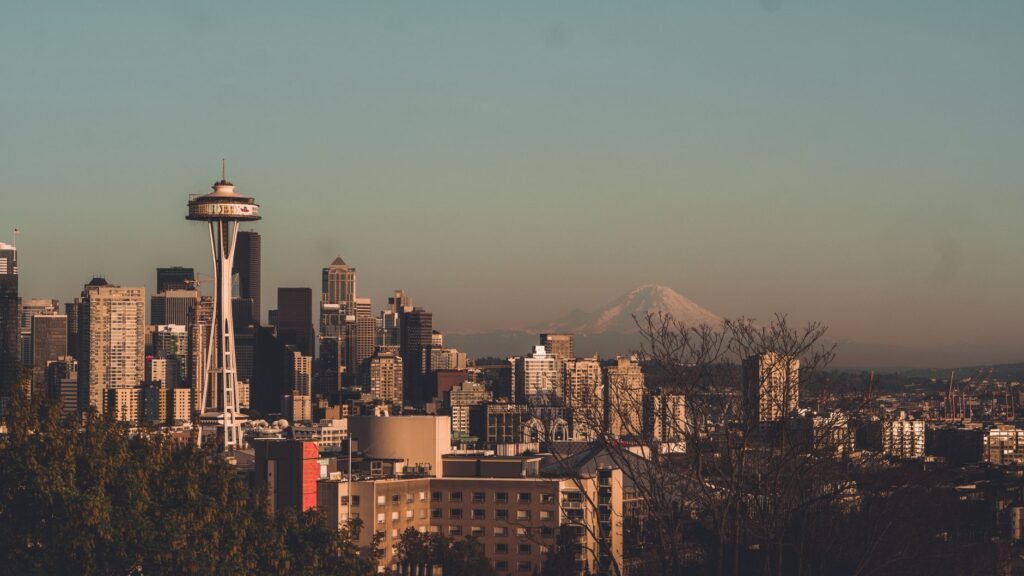
From Seattle, you can see Mount Rainier, the Cascade Range, and the Olympic Mountains on clear days. The city sits in a geographic between two major mountain chains, and the views are genuinely one of Seattle’s biggest perks. Most visitors have no idea just how many peaks line the horizon until they arrive and look up.
The thing is, clear days are not guaranteed. Seattle’s reputation for rain is exaggerated, but the overcast days are real. You’ll get plenty of soft, gray skies that hide the mountains entirely. When conditions align, though, the sight is hard to beat. A crisp morning after a storm passes through can offer the best views of the entire year.
Mount Rainier Dominates the Southern View
Mount Rainier is the star. This 14,411-foot volcano sits about 60 miles southeast of downtown Seattle. On a clear day, you can see it from Kerry Park in Queen Anne, from Green Lake’s north shore, and from countless spots across the city. It’s the kind of mountain that makes first-time visitors stop mid-stride and stare.
The peak looks close from certain angles. Distance is deceptive. What appears as a day trip turn into a proper outing because the mountain sits farther away than it looks. The drive from Seattle to the mountain’s base takes roughly two hours depending on traffic and your exact destination. The summit push takes several more hours and requires real mountaineering skills. Do not assume that seeing something means you can reach it quickly.
Rainier’s visibility changes dramatically based on where you stand in the city. From the Pike Place Market, you catch glimpses between buildings. From Kerry Park, the view dominates the entire scene. Green Lake offers an open vista with minimal obstruction. Capitol Hill has decent views from some spots but the neighborhood’s trees and buildings block the sight from street level. Your vantage point matters far more than you’d think.
The best viewing season runs from May through October. Spring brings melting snow that can create afternoon cloud cover around the peak, so early morning is your best bet. Summer tends to offer the clearest skies. Fall is often stunning. Winter brings the lowest clouds and least visibility, though blue-sky days do happen.
The Cascades Frame the Eastern Horizon
Beyond Rainier, the entire Cascade Range stretches north and south across the horizon. These peaks are less famous than Rainier but equally worth noticing. Mount Baker sits at the northern end, about 60 miles away. The Snoqualmie Range fills the view to the southeast. Peak after peak creates layers of white against the sky on crisp days.
The Cascades look best from neighborhoods on the east side of Seattle. Ballard has strong views. Green Lake is excellent. Fremont offers decent sightlines if you find the right corner. Downtown is trickier because tall buildings block the view unless you’re on an upper floor or in a specific spot like the Space Needle.
These mountains feel closer than the distant peaks because you’re looking at a range rather than a single summit. What appears as one white line on the horizon is actually dozens of individual peaks. Binoculars help you pick out individual summits. On extremely clear days, you can spot detail and texture in the rock faces. The depth and scale become obvious once you really look.
The Cascades are worth studying if you plan any hiking trips. The range holds some of the Pacific Northwest’s best day hikes. Snoqualmie Pass is the main highway crossing and sits about 50 miles from the city. The hikes around it range from easy waterfall strolls to serious alpine scrambles. Many people drive out, spend a few hours on the trail, and return the same day. The proximity makes casual adventure possible.
Read more: Road trip from Seattle to Yellowstone National Park
The Olympics Create the Western Drama
West of Seattle, across Puget Sound, the Olympic Mountains rise sharply from the water. These peaks catch the late afternoon light beautifully and create a dramatic backdrop for sunset views. Unlike Rainier, which sits inland and sometimes blends into the horizon, the Olympics stand bold and jagged.
The best views come from western neighborhoods or from the water itself. Ballard and Discovery Park offer superb sightlines. A ferry ride across the sound puts you right next to them. The Bainbridge Island ferry gives you a solid 35 minutes on the water with excellent views in both directions. Many locals take the ferry as much for the scenery as for the destination.
On a clear afternoon, watch the light change across the Olympic peaks. The snow patches shift from white to gold to pink as the sun moves. This shift takes about two hours, and it’s genuinely worth sitting on a bench and watching it happen. You see why artists and photographers get obsessed with this place.
The Olympics are less forgiving than the Cascades for casual visitors. The range includes wilderness areas and long approaches. Mount Olympus, the range’s namesake, requires a serious backpacking trip to reach. But the dramatic profile makes them worth studying even from a distance. The shape alone tells a story of rugged terrain and high snow.
Where to Actually See All Three
Getting all three mountain systems in one view takes planning. The Space Needle offers a 360-degree perspective. From the observation deck, you face east to Rainier and the Cascades, then turn west toward the Olympics. It’s not subtle, but it works. The Space Needle costs about $26 for an adult ticket and takes roughly an hour to do properly. Go in the morning if you can. Afternoon crowds are heavy, and the light is better earlier.
Kerry Park in Queen Anne is free and often provides better light and fewer crowds. The view focuses primarily on Rainier, but the Cascades fill the northern and southern edges of the panorama. The Olympics are visible to the west if you look. On a good day, you can identify specific peaks. The park has benches, minimal shade, and gets crowded on weekends. Weekday early mornings are ideal.
For a moving experience, take the ferry to Bainbridge Island. The 35-minute crossing gives you Puget Sound in the foreground, the Olympics on the right, and Seattle’s skyline and distant Rainier on the left. The views from the ferry are genuinely exceptional. A round-trip ticket costs about $17 per person. The ferry runs regularly, and you can bring a car or just walk on as a foot passenger.
Green Lake is a good choice for a casual look at multiple peaks. The walk loops about 2.8 miles around the water, and views open up on both the north and east sides. It’s crowded on nice days, especially summer weekends. Go early or on a weekday if possible. The neighborhood around the lake has coffee shops and breakfast spots. Many people combine a walk with a meal.
Timing Matters More Than You Think
Clear days are not evenly distributed. Late spring and early fall offer the best odds. June is strong. September and October are often excellent. Winter is cloudiest. Midwinter, December through February, you’ll see rain and overcast skies most days. When the sun does break through in winter, the views are often extraordinary because the air is clearer. It’s a trade-off.
Check the forecast before you plan a viewing session. If the forecast calls for clouds with breaks, morning is almost always better than afternoon. The light comes from the east in the morning, which brightens the eastern mountains better. By afternoon, clouds often build even if the morning was clear.
Wind also affects visibility. A strong breeze from the north or east pushes clouds out and clears the air. You’ll notice the view gets measurably better within a few hours of the wind shifting. Calm days can trap moisture and create haze. This is predictable enough that locals check the forecast as much for wind direction as for cloud cover.
Getting the Best Photos
The light matters far more than the equipment. Rainier photographs best in early morning with the sun low and behind you. The golden hour before sunset works well for the Olympics. Midday sun washes out the depth and texture. Plan accordingly.
From Kerry Park, you’ll see other photographers on clear days. Everyone is shooting the same composition, which is fine. The spot is popular because it works. If you want something unique, explore side streets in Queen Anne. Walk two blocks away from the main viewpoint and you’ll find quieter spots with slightly different angles.
The Space Needle interior is challenging for photos because of reflections on the glass. External photos work better, but the barriers make composition tight. Consider taking a few shots from ground level first. Sometimes the angle from below is more striking than the aerial view.
Avoid heavy filters or excessive editing when shooting these mountains. They are striking enough on their own. The appeal lies in the scale and simplicity, not in drama you impose afterward.
Understanding the Scale
Visitors often underestimate distances. Mount Rainier looks close enough to touch from Kerry Park. The drive takes two hours. The Cascades look like a short hop. Getting to serious hiking trailheads takes 45 minutes to an hour. The Olympics seem to rise just across the sound. Even by ferry, you’re looking at significant travel time to reach true high country.
This is not a complaint. The proximity is genuinely remarkable. Few major American cities sit with this much dramatic scenery at their doorstep. Just plan accordingly. Do not assume that visible mountains are accessible for a quick afternoon outing unless you have experience with the area.
The season also affects access. Rainier’s main visitor area opens fully in summer. Winter snow closes roads and trailheads. The Cascades are similar. In summer, dozens of hiking options open. In winter, high passes are closed. The Olympics are more accessible year-round, but snow and weather still dictate conditions above certain elevations.
Seeing Mountains is Not the Same as Visiting Them
Looking at the peaks from the city is free and requires no planning. Many visitors find it satisfying enough. The sight makes Seattle feel connected to something larger. It frames the city within a bigger geographic context. That matters.
If you do want to get closer, pick one peak or range and commit to a day trip. Do not try to see everything. A full day in the Cascades, visiting a waterfall or tackling a moderate hike, is better than a rushed car tour of three locations. Rainier requires even more time if you want to do it justice. The Olympics need serious backpacking or climbing.
You can absolutely enjoy the views without hiking or climbing. Sit on a bench at Kerry Park with a coffee. Take the ferry and watch the light change. Drive to a viewpoint and spend an hour looking. The mountains are there whether you approach them or admire them from a distance. Seattle offers the luxury of both options.
The key is showing up on a clear day. That is the real bottleneck. The mountains themselves are always there. The weather decides whether you see them. Plan for multiple viewing opportunities during your stay. Odds are good that at least one morning or afternoon will deliver clear skies. When it does, drop what you are doing and look up.
Reference: Mount Rainier