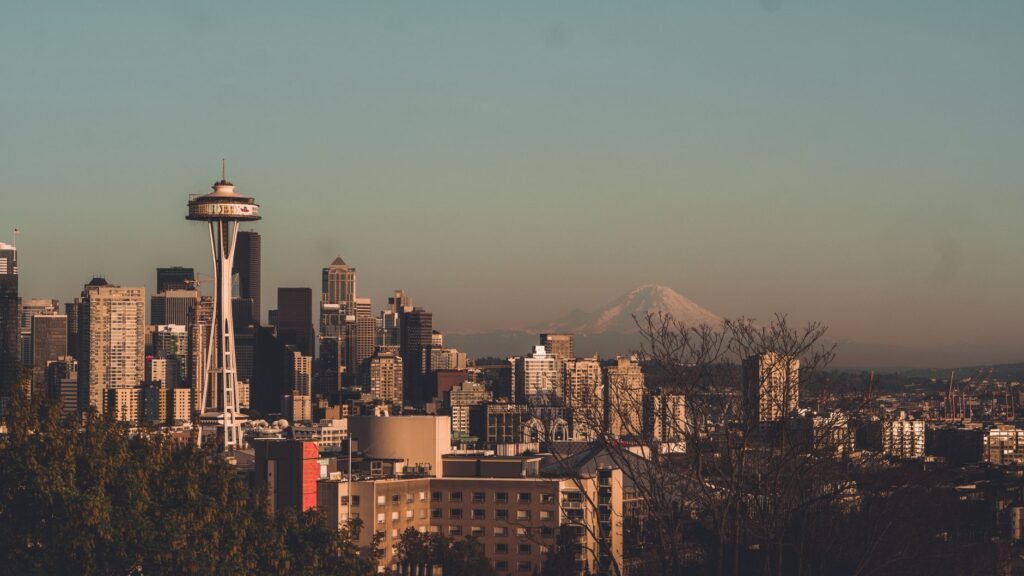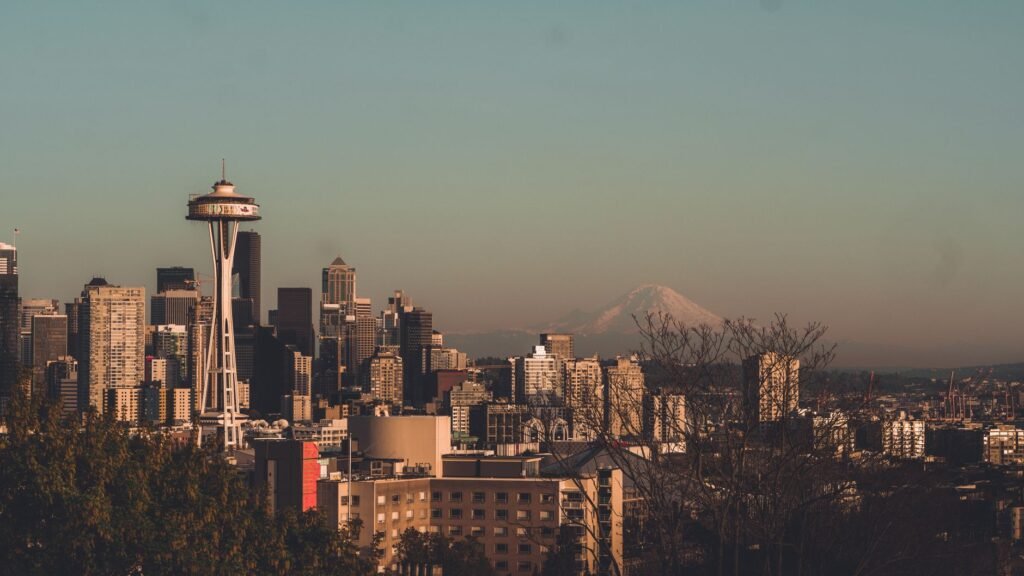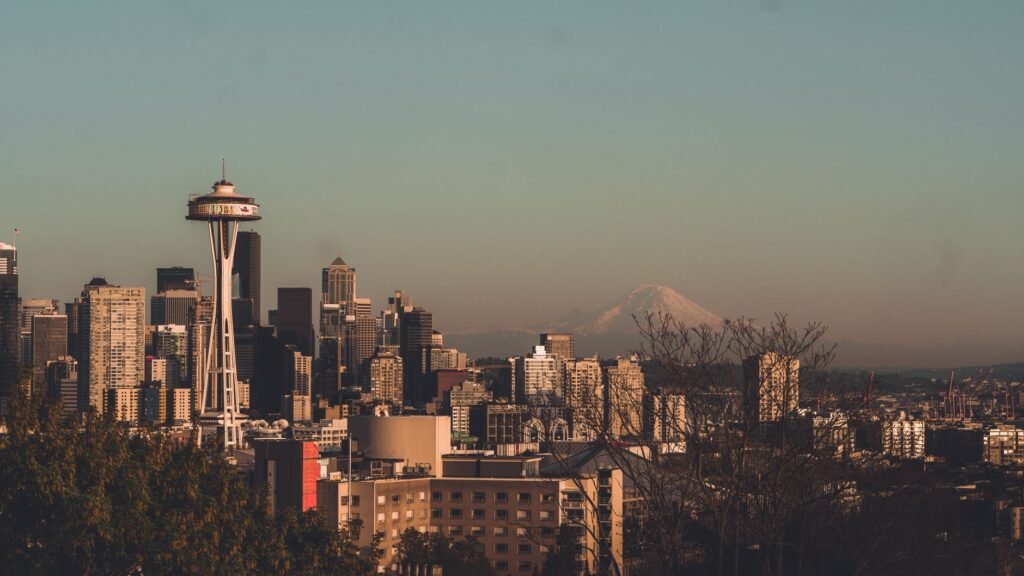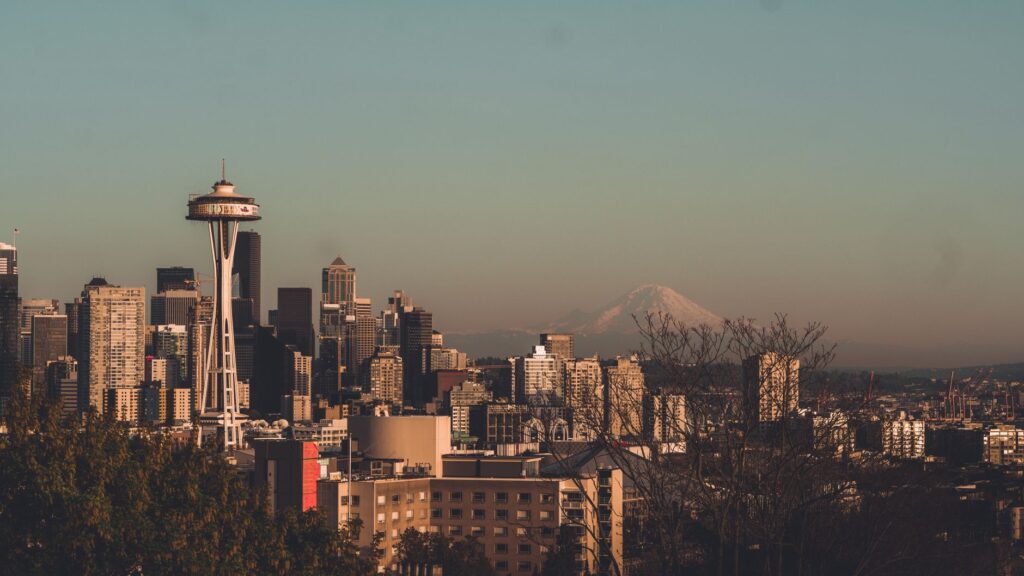

Yes, you can see Mount Rainier from Seattle on clear days. The mountain sits about 60 miles south of downtown, and on those bright mornings when the weather cooperates, it rises unmistakable and white above the horizon. But here’s what you need to know before you plan around it. The visibility is never guaranteed. Rain and cloud cover are common enough that you cannot count on seeing it. Many visitors to Seattle never catch a glimpse, not because the mountain isn’t there, but because the Pacific Northwest’s weather has other plans.
I’ve spent time in Seattle across all seasons. The view of Mount Rainier shifted each trip. Some mornings I walked out of my hotel to find it commanding the entire southern skyline. Other weeks I searched for it and found only gray clouds. This unpredictability frustrates visitors who build their Instagram shots around it. But that’s the reality of the Puget Sound region. Weather systems roll in fast. Humidity traps moisture between the Cascades and the Sound. The mountain disappears.
When You Can Actually See Mount Rainier
Clear days are your best bet for catching the peak. Early fall tends to offer the clearest views. September through October brings drier air and sharper visibility. Summer is your second-best window, though afternoon heat can create haze. Winter storms cloud things up for weeks at a time. Spring stays wet and unpredictable. If you’re visiting with the mountain view as a goal, time your trip for September or early October.
Early morning light also helps your chances. The mountain shows best before noon. Humidity builds as the day wears on. Afternoon haze softens the view or wipes it out entirely. This means you want to be positioned to see it between sunrise and 10am or 11am. By afternoon, you’ve often missed your shot.
Temperature drops correlate with visibility too. After a cold front pushes through and temperatures dip, the air clears. Watch the forecast. A day showing 62 degrees and sun will likely give you a mountain view. A day at 68 degrees and partly cloudy might not.
The Best Seattle Neighborhoods for Mountain Views
Views vary dramatically across the city. Geography matters more than distance. You need the right angle and clear sightlines to the south.
Capitol Hill sits in the center of Seattle. It offers decent views from high points, but buildings and trees block most views. You’re working around obstacles. Queen Anne is better. The neighborhood climbs a significant hill, and from higher elevations you get clearer sight lines south. Walk up from the water toward the top of Queen Anne Hill. The mountain becomes visible on clear days.
Ballard sits northwest of downtown. The views from here are often obscured by the city’s own skyline. Downtown itself is a poor spot. Tall buildings cluster together and block the view entirely. The waterfront neighborhoods offer better odds than interior areas. The Sound side has fewer obstacles between you and the mountain.
West Seattle gets strong views on clear days. The neighborhood sits slightly elevated and faces the mountain directly. Head to the Alki neighborhood or higher points in West Seattle. You’ll find the clearest views here for residents and visitors alike. South Seattle suburbs like Renton and Kent sit closer to the mountain but are less interesting to visit. If your only goal is seeing Rainier, drive south into the suburbs. But if you want to combine the view with actually exploring Seattle, head to West Seattle instead.
Where to Go for a Guaranteed View
Here’s the honest part: Seattle isn’t where you go for guaranteed mountain views. You go to a vantage point closer to the mountain itself. This is only 60 miles away, an easy drive south on Interstate 5.
Paradise is the most famous viewpoint on Mount Rainier. It sits on the mountain’s south slope at 5,400 feet elevation. The drive takes about two and a half hours from downtown Seattle. You arrive at a visitor center, hiking trails, and unobstructed views of the peak above you. On a clear day, this is stunning. The mountain towers directly overhead. No question about what you’re looking at.
Sunrise is another viewpoint on the northeast side of the mountain. It’s an additional 45 minutes to an hour from Paradise. Sunrise offers views of the peak from a different angle and typically sits above more cloud cover. If clouds obscure the view at Paradise, Sunrise might clear them.
The drive to Paradise costs nothing. The mountain has no entrance fee. You pay for gas and meals. This makes it an affordable half-day trip from the city. Leave early in the morning from Seattle. Drive south. Spend three to four hours at Paradise. Drive back. You’re home by early evening.
Road conditions matter. Winter storms can close the roads to Paradise or Sunrise for days. Check conditions before you drive. Summer and early fall are safest. Late fall through spring brings closure risks. Call ahead if you’re traveling between November and March.
Read more: How to Get from Seattle to Mt Rainier
Seattle Viewpoints Without the Drive
Some spots in the city itself deliver decent views without leaving town. These work best if you get lucky with the weather.
Kerry Park is a small park in Queen Anne. It sits on the highest point in the neighborhood. On clear days, you get a view south toward the mountain. The park is tiny. It fills with tourists. But for 10 minutes and zero cost, it’s a fair option. The view is small and distant, not comparable to Paradise. But many people snap a photo here and move on. Go early if you want to avoid the crowds.
Green Lake is another option. The lake circles a paved path used by runners and walkers. From the east side of the lake, looking south on a clear morning, you can see the mountain across the water. It’s a soft, framed view. The lake creates a nice composition. You’re also at a place you’d want to be anyway. The neighborhood around Green Lake has coffee shops and restaurants. You’re not driving two hours south. You’re living your Seattle morning.
The Space Needle observation deck sits downtown. On a clear day, you can spot the mountain to the south. The views are elevated and panoramic. Admission costs around $30 per person. Many visitors include it in their Seattle day anyway, so if you’re going anyway, yes, look south. But I would not buy a ticket purely for the mountain view. The ticket costs too much for such a distant sighting.
Walking around the waterfront can yield glimpses. On certain piers and parks along Elliott Bay and the Sound, you get unobstructed southern views on clear days. The views are free and happen naturally as you explore. Don’t plan your day around them, but if you’re walking the waterfront and the clouds part, you’ll see it.
Read more: Mount Rainier Distance from Seattle
What to Expect If You Drive South
Reaching the mountain itself requires commitment but pays off. The route is straightforward.
Interstate 5 runs straight from Seattle toward the mountain. You head south toward Tacoma. Once past Tacoma, you exit toward the Nisqually entrance to Mount Rainier National Park. Follow signs carefully. The roads are well marked. The drive is easy. No complicated navigation required.
Bring layers. The mountain sits at elevation. Temperature drops about 3 degrees for every 1,000 feet of altitude. Paradise sits at 5,400 feet. It’s typically 20 to 25 degrees cooler than Seattle. A clear, warm day in the city becomes cold and windy at the peak. Bring a jacket and a sweater even if Seattle is sunny.
Bring water and snacks. The visitor center has some options, but they’re limited and pricey. Pack what you need. A thermos of coffee or tea is smart. The views are better when you’re comfortable.
The hiking is optional. Many people drive up, walk the immediate areas around the visitor center, and drive back. The park has trails of varying difficulty. Skyline Trail is popular and offers excellent views. It’s about 5 or 6 miles round trip with elevation gain. Other trails are shorter. You choose your effort level.
Crowds build on weekends. Parking fills in late morning. Arrive before 9am if possible. This gives you time to enjoy the views without fighting crowds. By afternoon, families and groups arrive in waves. The experience deteriorates.
The Honest Truth About Rainier and Seattle
Most first-time visitors don’t see the mountain from Seattle itself. This isn’t a failure. This is weather. Accept it early. If you see it, great. If you don’t, it’s not a missed vacation. The city has plenty to offer beyond a mountain view.
If a clear view of Mount Rainier is important to your trip, drive south. The distance is short. The effort is minimal. Paradise and Sunrise deliver. You’ll see the peak. You’ll have photos. You’ll understand why people talk about this mountain.
If you’re visiting Seattle for the city itself, the neighborhoods and food scene and music and art, then the mountain view is a bonus. Some trips you’ll catch it. Other trips you won’t. Both are full trips. Both are worthwhile.
The weather is what it is. You can’t control it. But you can time your visit in September, check the forecast for clear mornings, and position yourself in a good spot. If the clouds part, you’ll see it. If they don’t, you visited a great city. That’s not a bad outcome.
Reference: Mount Rainier