If you’re planning a road trip through the Pacific Northwest, the drive from Vancouver to Seattle is straightforward routes you’ll tackle. The journey spans roughly 225 kilometres and takes about three to three and a half hours depending on traffic and which route you choose. For Indian travellers accustomed to navigating highways across India, this drive will feel remarkably organised and straightforward. The roads are well-maintained, signage is clear, and the entire stretch is fairly direct without the kind of navigation challenges you might face on other North American routes.
Distance and Driving Time for Vancouver to Seattle
The most direct distance between Vancouver and Seattle is approximately 225 kilometres. However, when you factor in the actual driving route, you’re looking at somewhere between 230 and 240 kilometres depending on exactly where you start in Vancouver and where you’re heading in Seattle. The straightforward answer is three to three and a half hours of actual driving time under normal conditions.
Traffic patterns matter significantly here. If you’re leaving Vancouver early in the morning, say between 6 am and 8 am, you’ll hit light traffic and might complete the journey closer to the two hour fifty minute mark. Leaving during rush hour periods (8 am to 10 am, or 4 pm to 6 pm) can add thirty to forty-five minutes to your trip. Weekend traffic is generally lighter, making a Saturday or Sunday departure a smarter choice if your schedule permits it.
Border crossing delays add another variable to your timeline. The Canada-US border crossing near Blaine, Washington typically takes fifteen to thirty minutes on average. During peak travel times like summer holidays or long weekends, you might spend forty-five minutes or even an hour at the border. Build this time into your planning rather than hoping for the best.
One detail that catches many visitors off guard. The time zone changes when you cross the border. British Columbia operates on Pacific Time, as does Washington State, so your watches won’t shift. This removes one complication from the vancouver drive to seattle experience and makes scheduling easier if you’re coordinating meetups or reservations.
The Main Route. I-5 South
The Interstate 5, commonly called I-5, is your primary corridor for this journey. This highway runs directly from Vancouver southward through Washington State and all the way to Mexico. For your purposes, you’re using only the northern Washington stretch, which runs from the border near Blaine down through Seattle.
The route is straightforward because there’s essentially one main highway option. You exit Vancouver heading south, pass through the Canada-US border checkpoint at Blaine, and continue on I-5 for the remainder of the trip. The highway is four lanes in most stretches and extremely well-maintained. Road quality in the United States generally exceeds what Indian travellers expect, and this section proves it.
Signage is comprehensive and directional markers appear regularly. Lane markings are clear, and the overall driving experience feels organised. Speed limits on I-5 are typically 65 miles per hour (about 105 kilometres per hour). Most traffic moves at or slightly above this limit. Road conditions are reliable year-round, though winter months can bring rain and occasional icy patches in the Seattle area.
What you won’t encounter on this route is toll roads, which simplifies things considerably. You pay nothing for using I-5. Some routes in the Pacific Northwest do include toll sections, but this particular stretch doesn’t, making your costs straightforward. Fuel is your main driving expense, and petrol prices are generally stable in this region.
Planning Your Border Crossing
Crossing from Canada into the United States at the Blaine border crossing requires some preparation. First, you need proper documentation. Your passport is essential. Indian citizens require a valid US visa or an approved ESTA (Electronic System for Travel Authorization) to enter the United States. If you haven’t secured these before your trip, sort this out well in advance. The border crossing itself won’t process you without proper credentials.
Your vehicle documentation matters as well. You’ll need your vehicle registration and proof of insurance. If you’re renting a car in Canada, bring your rental agreement. The rental company typically handles cross-border permits, but confirm this when you pick up your vehicle. Some rental agencies charge additional fees for border crossings, so know your terms beforehand.
The physical process at the border is quick once you reach the checkpoint. You’ll pull up to a booth, hand over your passport and documents, and answer basic questions about your visit. Border officers want to know where you’re staying, how long you’re visiting, and whether you’re carrying goods that might be restricted. Answer honestly and directly. The entire interaction usually takes five to ten minutes unless the officer has follow-up questions.
Currency exchange is something to consider. The US dollar and Canadian dollar are separate currencies. Many places in Seattle accept both, but you’ll get better rates using US dollars. ATMs are abundant near the border and throughout Seattle, so you can withdraw US currency without stress. Credit cards work everywhere, making this less critical than in decades past.
What to Expect on the Road
The landscape changes gradually as you head south from Vancouver. British Columbia’s urban sprawl gives way to suburban areas, then farmland and forest. The Puget Sound region around Seattle is heavily forested, with glimpses of water visible from the highway in places. The driving itself is relaxing because the road is flat and straight for most stretches.
Rest stops and service areas dot the I-5 corridor. These facilities are clean and well-maintained compared to rest areas in many other countries. You’ll find bathrooms, shops, and restaurants at regular intervals. If you need to stretch your legs or refuel, you won’t wait more than twenty or thirty minutes between exit options. This is one of the perks of North American highway infrastructure.
Weather can affect your drive depending on the season. Rain is common in the Pacific Northwest, especially from autumn through spring. Bring windshield wipers that work well and drive cautiously in wet conditions. Summer months are drier and clearer, making for pleasant driving. Winter snow is rare in the coastal areas but occasional ice can form on I-5 during cold snaps. Check weather forecasts before leaving and adjust your departure time if conditions look dicey.
Traffic incidents happen, though less frequently than on major Indian highways. If there’s an accident or construction, electronic signs above the highway provide warnings. Radio stations broadcast traffic updates every ten to fifteen minutes. Your rental car likely includes a decent sound system or smartphone connectivity, so staying informed is easy.
Stopping Points Along the Way
Breaking up your journey with a stop makes sense if you want to explore the region. Bellingham, Washington sits about halfway between Vancouver and Seattle. This is a pleasant college town worth exploring for an hour or two. You’ll find shops, restaurants, and a relaxed atmosphere. The town sits near Bellingham Bay, offering water views and green spaces.
The outlet malls near Blaine, just south of the border, attract many shoppers. If retail interests you, these stores offer duty-free shopping advantages. Most visitors spend thirty minutes to an hour browsing before continuing south.
Olympia, Washington’s capital, sits slightly east of I-5 about an hour north of Seattle. If you’re interested in state government buildings or museums, this detour is possible. However, it adds driving time, so only consider it if you have extra time and genuine interest.
Arrival in Seattle
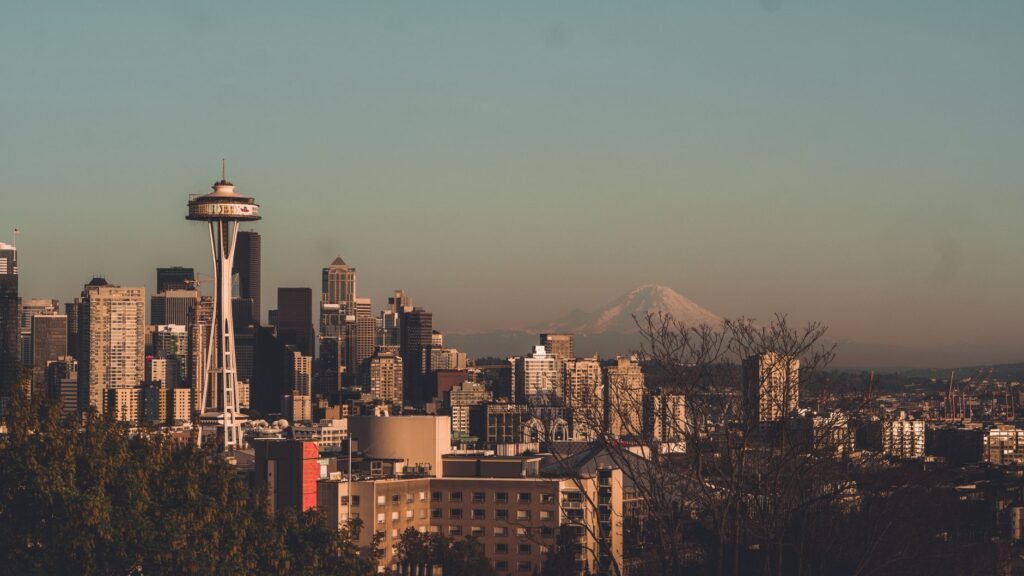
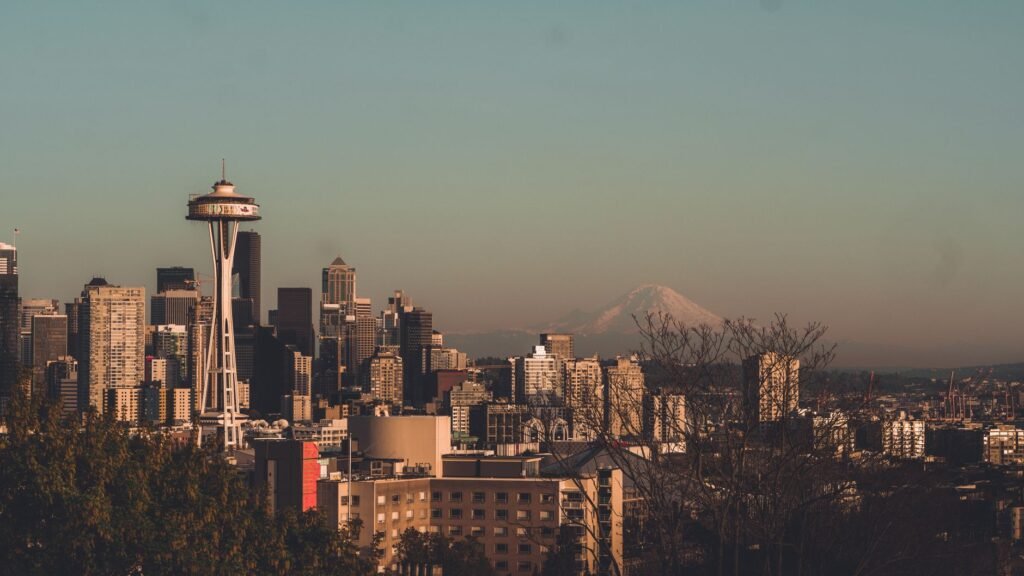
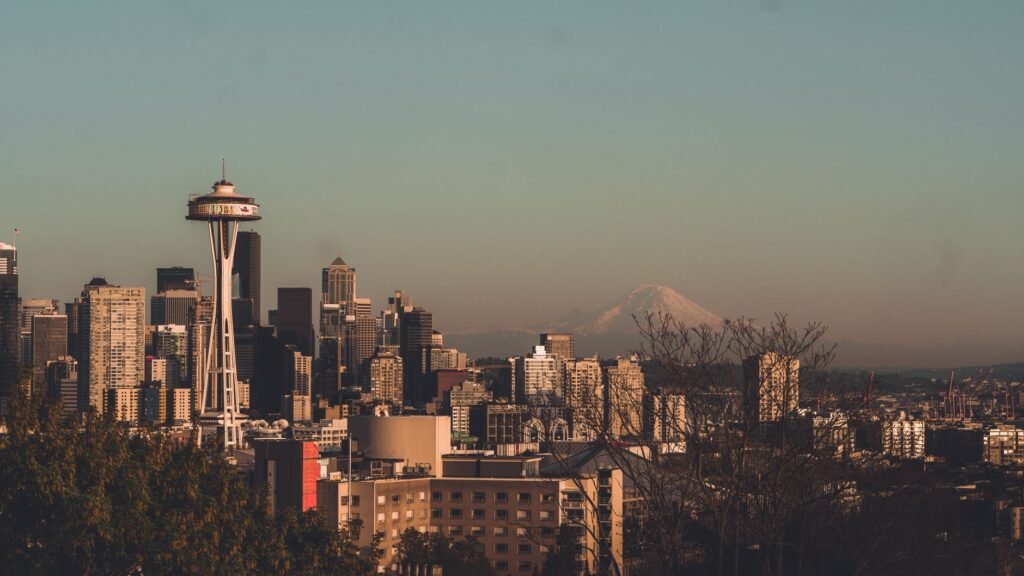
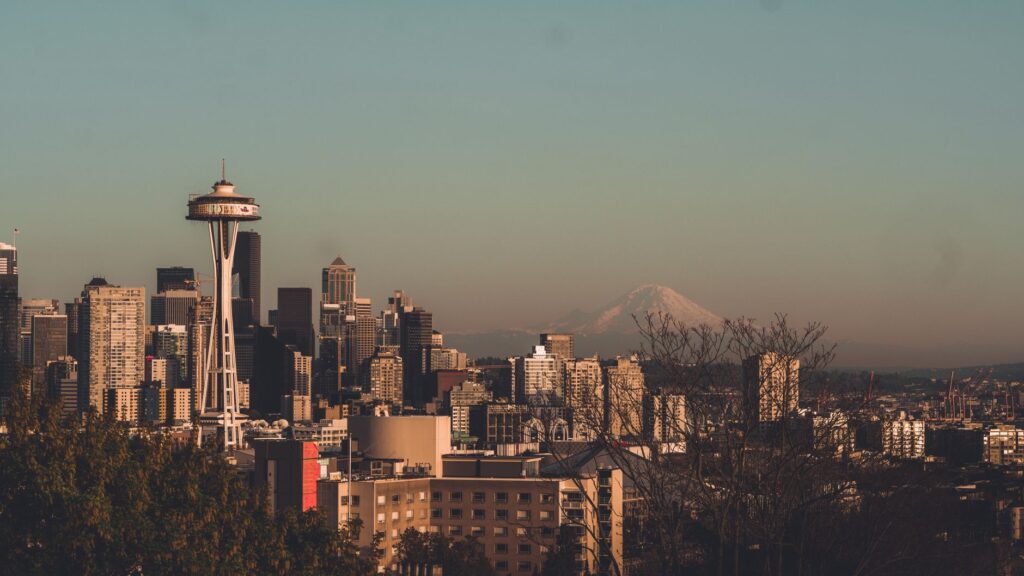
The Seattle skyline appears gradually as you approach from the north on I-5. You’ll pass through residential areas and industrial zones before reaching downtown. Knowing exactly where you’re going in Seattle matters because the highway system splits into multiple routes as you approach the city. The Space Needle and downtown core sit slightly east of I-5, requiring you to navigate secondary highways or surface streets.
If your destination is downtown Seattle or the central waterfront area, watch for signs directing you toward I-90 or local exit numbers. GPS or a mapping app is invaluable here because exits come quickly. Unlike Vancouver’s relatively uncomplicated approach, Seattle’s highway system demands your attention during the final fifteen to twenty minutes of your drive.
Parking is available throughout Seattle but varies in cost and availability depending on your location. Downtown parking commands premium prices, while residential neighborhoods and commercial areas offer cheaper options. Plan where you’ll park before arriving, especially during peak tourist seasons.
Essential Driving Tips for This Route
Keep your fuel tank reasonably full before leaving Vancouver. While service stations are available throughout the drive, stopping for fuel near the border is sensible. American fuel prices are sometimes lower than Canadian prices, but not always. Fill up when it’s convenient rather than waiting for specific pricing advantages.
Maintain a steady speed and avoid aggressive driving. North American highways have strict speed enforcement, and speeding tickets are expensive and complicated for international visitors. Driving at the posted limit is the simplest approach and still gets you to Seattle efficiently.
Insurance coverage is crucial. Ensure your travel or rental car insurance covers cross-border driving. Most policies do, but confirm this before your trip. US medical costs are extraordinarily high, making proper coverage essential.
Familiarise yourself with US traffic rules if you’re unfamiliar with them. Right turns on red lights are permitted unless signs indicate otherwise. Keep right except to pass. These rules differ slightly from Canadian driving norms, so review them beforehand.
Practical Details for Indian Travellers
Converting distances to kilometres helps you navigate comfortably. The 65 miles per hour speed limit equals about 105 kilometres per hour. Fuel is sold in gallons, not litres. One gallon equals roughly 3.78 litres, so a 40-litre tank needs about 10-11 gallons. These conversions become automatic quickly.
Tipping is expected in the US. If you stop for food or drinks, budget 15 to 20 percent tips beyond the listed price. This applies to restaurants, cafes, and sometimes gas station attendants. The price shown is never the final price you pay, which surprises many visitors from India.
Your mobile phone works in the US if your plan includes roaming or if you purchase a local SIM card. Most major carriers offer reasonable roaming rates, but buying a local prepaid SIM at the airport is often cheaper. Having working phone navigation is genuinely helpful on this route.
The vancouver to seattle drive is manageable, well-organised, and straightforward. Plan for about four hours including the border crossing, leave during daylight hours, and you’ll find the entire experience smooth and uneventful.