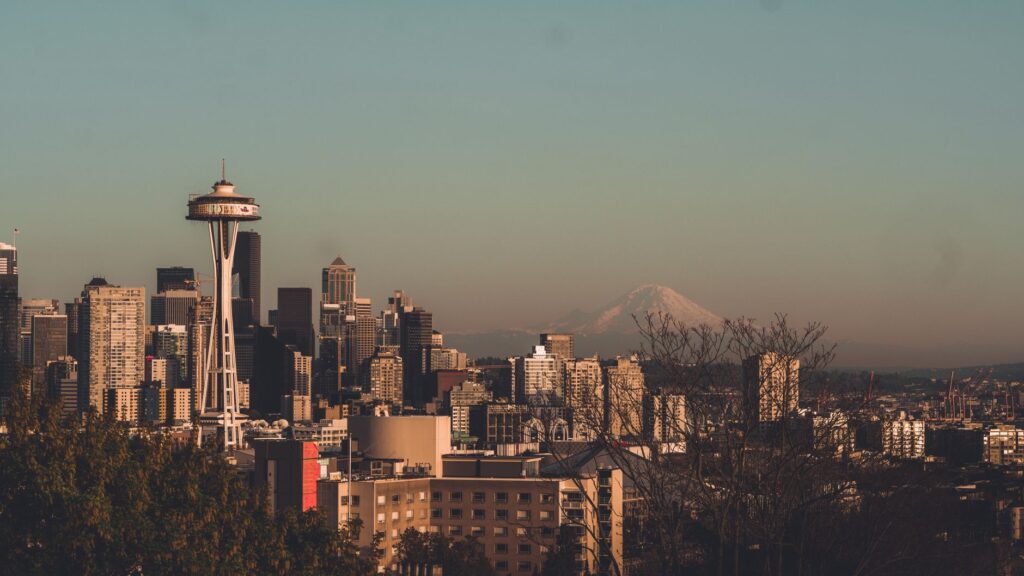
Four days in Seattle is enough to see the core of the city and feel like you actually got to know it. You will not rush if you plan right. You won’t waste time on tourist traps either. The goal here is to hit what matters, eat where locals eat, and get a real sense of how the place works.
Seattle rewards visitors who take it slow. The weather is mild but often gray. The coffee is real. The people are friendly in a way that sometimes reads as distant until you realize they just respect your space. This itinerary moves you through the neighborhoods that define the city. It skips the obvious dead zones and sits you down in front of views that actually move you.
Day 1: Downtown and Pike Place Market
Start your first morning at Pike Place Market right when it opens. That’s 9am or so. Early is not optional here. You avoid the thick crowds. The vendors are fresh. The smell of fish and coffee hits different when there are only thirty people instead of three hundred.
Walk down to the fish throwing stalls first. Yes, it’s touristy. Yes, locals avoid it. Do it anyway. Watch the guys work for ten minutes. Grab a coffee from one of the smaller stands, not the famous one with the long line. The coffee is the same quality. The wait is not.
Spend a real hour in Pike Place. Most visitors give it twenty minutes. That’s a mistake. Walk the upper level where the farmers sell vegetables and flowers. Go down the back stairs to the lower floors. There are used books, vintage records, and small shops that have been there for decades. This is where you get the actual market, not the performance of it.
Lunch should be simple. Grab a sandwich or noodles from a vendor. Sit on one of the benches overlooking Elliott Bay. The water and the Olympic Mountains to the west are there. On a clear day, they appear almost false. Too clean. Too far away.
Spend the afternoon walking south from the market. Head down the waterfront toward the stadiums. The path is flat and easy. You pass through some of the oldest parts of the city. Pioneer Square sits here. It’s brick buildings and history. A lot of it is now coffee shops and galleries and bars, but the bones are real.
Stop at the Hammering Man sculpture outside the Art Museum. It’s a kinetic piece by Jonathan Borofsky. It’s been going since 1991. Not everyone notices it. That makes it better.
Dinner should land you somewhere with a view. The waterfront has obvious options. Walk instead to Capitol Hill. Take a bus or a quick Uber. This neighborhood is where young Seattle lives. The energy is different from downtown. It’s younger. Noisier. More interesting after dark. Eat somewhere on Pike Street or Broadway. Pick a place that looks busy at 7pm. You won’t go wrong.
Day 2: Museums and Views
The Chihuly Garden and Glass Museum dominates the morning of most four-day trips. It sits next to the Space Needle. The glass sculptures are extraordinary. If you like visual art at all, give it three hours. If you’re not into it, skip both and spend the morning at the Museum of Pop Culture instead. MOPOP is better for most travelers. It covers music, movies, and gaming. It’s interactive and fun.
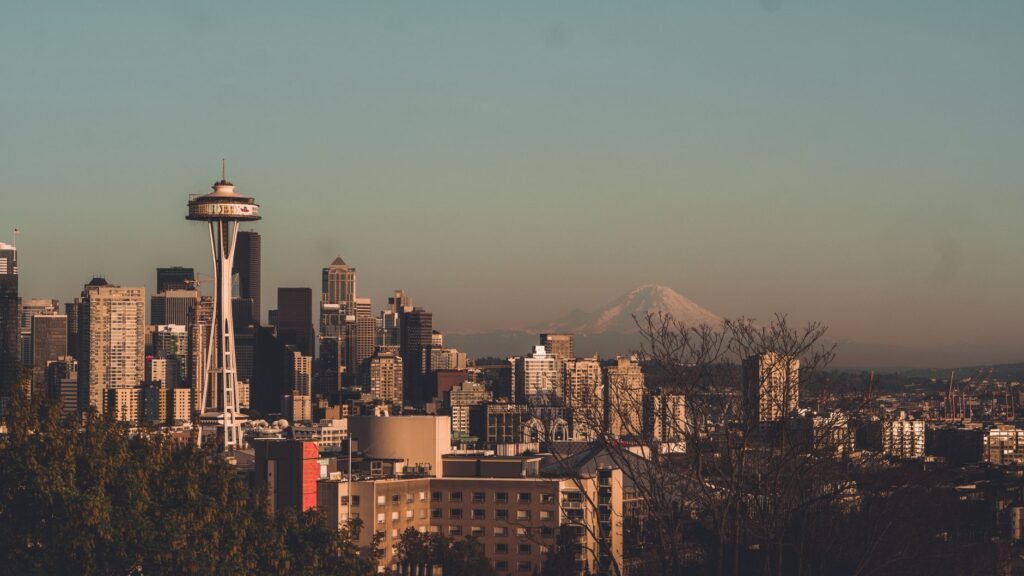
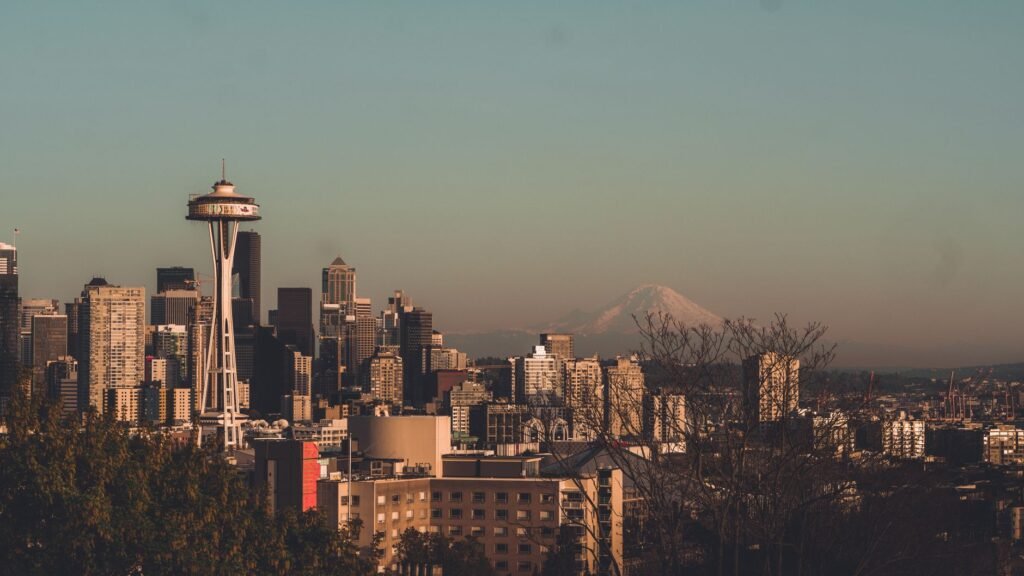
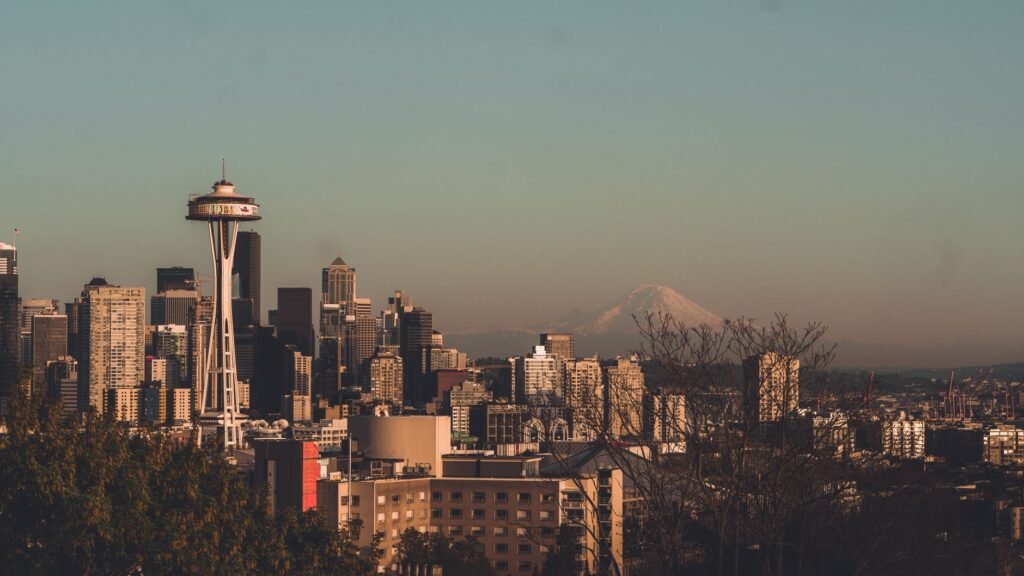
The Space Needle is what you do after if you went to Chihuly. The view is good. The ticket costs about $24. The line moves fast unless you visit after 4pm. Go early. The view of the Puget Sound, the Cascades to the north, and Mount Rainier on a clear day is what postcards use. On a gray day, which is common, it’s still good. It’s just quieter and moodier.
Skip the restaurant inside. Lunch should be near Kerry Park instead. Get back down. Walk or take a bus to this viewpoint in the Magnolia neighborhood. It’s free. The sight line straight across to the Space Needle and the sound and the mountains is professional grade. Bring a sandwich or stop at a place nearby. Sit for a while. This is worth thirty minutes of your trip.
The afternoon opens up. You have choices here.
Option one is the waterfront aquarium. It’s solid. The octopus tank is worth seeing. It will take two hours. The crowds are real, and so is the price at about $32 per person.
Option two is to visit the Museum of Flight at Boeing Field south of the city. It’s larger and less crowded. You need 90 minutes at least. The Concorde is there. The first 747 is there. If you care about aviation at all, this beats the aquarium.
Option three is to skip museums and head to the University District. Walk around the University of Washington campus. Grab coffee at one of the cafes. Browse the used bookstores and record shops on University Way. This is how locals spend a lazy afternoon. It costs nothing and feels less artificial.
End the day at a place like The Walrus and the Carpenter or Altura if you can get a reservation. Both are excellent. Both require booking ahead. If those are full, walk through Belltown or Capitol Hill and pick a place that has good energy. Seattle’s restaurant scene is strong. You will not stumble into bad food.
Also read: Unique Places to Stay in Seattle Cool Hotels
Day 3: Neighborhoods and Coffee Culture
Pick one neighborhood and live in it for the day. This is the real way to see a city. Ballard is a solid choice. It’s northwest of downtown. It has history as a fishing and shipbuilding area. It has new restaurants and breweries mixed with old family-run places. Walk around. Stop for coffee. Eat lunch at a food truck or a casual restaurant. Walk to the Ballard Locks and watch the salmon and boats go through. It’s strange and specific and free.
An alternative is the Fremont neighborhood. It sits north of Lake Union. Fremont has a quirky reputation that sometimes oversells itself, but the core is real. There’s the Fremont Sunday Market if you go on a weekend. There’s the outdoor sculpture park. The Fremont Troll lives under the Aurora Bridge. It’s holding an actual car. Fremont also has some of the best coffee shops in the city. Stumptown Coffee Roasters has a location here. So does Slate Coffee. Walk in, order an espresso or a pour over, and sit. Watch the neighborhood move past.
Capitol Hill is another route if you want energy. It’s east of downtown. The Pike Pine corridor is the main spine. Walk it. Look up at the buildings. Half of Seattle’s best bars are in Capitol Hill. Most of the music venues are too. If you visit on a weekend evening, this neighborhood becomes the center of Seattle’s nightlife. If you visit during the day, it’s just a good neighborhood with a young population and strong coffee shops.
Whatever neighborhood you pick, spend time sitting. Order coffee or a drink. Look at people. Notice the architecture. This is how you actually understand a place. It’s not fast. It’s not efficient. But four days means you have room for it.
Dinner can be casual. Pick a neighborhood restaurant. Ask for a recommendation from someone who works at your coffee shop. This works almost every time.
Day 4: Water and Departure
Your last full day or partial day should involve water if the weather allows it. The San Juan Islands are about two hours north of Seattle by car and ferry. But that’s a full day or more. A better use of time is a shorter water trip.
Take a ferry across Puget Sound to Bainbridge Island. It leaves from the ferry terminal on the waterfront. The cost is about $8.50 one way. The trip is 35 minutes. You stand on deck or sit inside. You watch Seattle get smaller. The water is cold and real. The air is different out there.
Bainbridge Island is not an exotic location. It’s a small island community with farms, galleries, and quiet roads. Walk around the town center for an hour. Grab lunch at a local spot. Walk down to the beach. Walk through some of the residential streets. There’s nothing specific you need to see. The point is the rhythm change. The slow. The water all around you.
Return on a ferry that gets you back by late afternoon. This gives you time to pack and head to the airport or grab an early dinner before leaving.
If the weather is rough or you want something different, spend the morning at the Woodland Park Zoo or a walk through Discovery Park. Discovery Park is Seattle’s largest park. It’s in Magnolia. The trails wind through forest and down to a beach with views of the Sound and the Olympics. It’s quiet in a way that downtown is not.
Also read: What to Do in West Seattle a Complete Local Guide
Practical Details
You need a place to stay. Pick a hotel in Capitol Hill or near Pike Place Market. Both put you near restaurants and transit. Downtown hotels are fine but often feel corporate. Capitol Hill has better energy and better bars and cafes within walking distance.
Rent a car only if you want to explore outside the city. Downtown and the main neighborhoods are walkable and have decent bus service. Ride shares work fine but add up fast. The monorail connects downtown to the Space Needle and Seattle Center. One ride costs about $2.75.
Pack layers. Seattle summers are dry and pleasant. Spring and fall are gray but mild. Winter is cold and wet. Even in good months, the sun can hide. Bring a light rain jacket no matter when you visit. A sweater that you can tie around your waist works.
Eat Pike Place clams at the market. Eat fish and chips somewhere on the waterfront. Eat ramen in the International District. Try a coffee drink at three different coffee shops. This is the food circuit worth doing.
The city is safe in the areas mentioned here. Downtown and the neighborhoods listed are fine day and night. Standard city sense applies. Don’t leave bags in cars. Watch your surroundings. This is not different from any major city.
Four days is not a lot of time, but it’s enough to get the shape of Seattle. You will miss things. That’s the point. You will come back. This city has layers. You see them differently on the second visit, when you know where the good coffee is and which neighborhood feels like home to you.
Reference: Seattle