The best unusual things to do in Seattle move past Pike Place Market. You’ll find them in neighborhoods most first-time visitors never reach. They live in small museums, underground vaults, and the kind of spots that locals actually talk about when they’re home alone, thinking about their city.
The Underground Tour Isn’t Just a Gimmick
Seattle’s original street level sits one story below ground today. Most people know this fact. Few people actually go down and walk through it. The Underground Tour takes you through old brick passageways, failed storefronts, and the bones of a city that literally rebuilt itself upward in the 1890s. The light filtering through old glass floor tiles makes the whole thing feel less like a museum and more like time travel.
Book ahead if you want to go. The popular daytime slots fill up fast. Most tours run about 90 minutes and include plenty of strange details about Seattle’s rougher past. You’ll hear about the Great Fire of 1889 and the creative solutions that followed. The guides know this material cold. They’re not reading from scripts.
Expect to pay around $22 to $35 depending on the tour type. The walk involves stairs and tight spaces. Wear shoes you don’t mind scuffing up. The air down there stays cool year-round, so bring a light layer even if it’s warm above ground.
What makes this unusual isn’t the concept. It’s that Seattle actually has real history underground instead of tearing it all down. The city chose to preserve it, which says something about the place.
Waterfall Forest in the Middle of the City
Green Lake is where most tourists with kids end up. Green Lake is also where a thousand other tourists end up. Head instead to Ravenna Park. It’s less than two miles away but feels like a completely different geography.
The park sits in a wooded ravine with a creek running through it. Real waterfalls drop through the trees. A short trail loops past them without breaking a sweat. You get vertical greenery, the sound of water, and maybe a dozen other people instead of crowds. That’s the trade.
The park charges nothing. Parking is street parking on a quiet residential block. Go early on a weekend if you want to find a spot. The trail itself takes 20 to 30 minutes for most visitors. Many people do it twice to explore the side branches.
This works especially well if you’re staying in the north part of the city. It also works well if the weather is decent. Rain turns the paths into mud pretty fast. The Pacific Northwest rain is real, not the light mist people imagine.
The Gum Wall Phenomenon
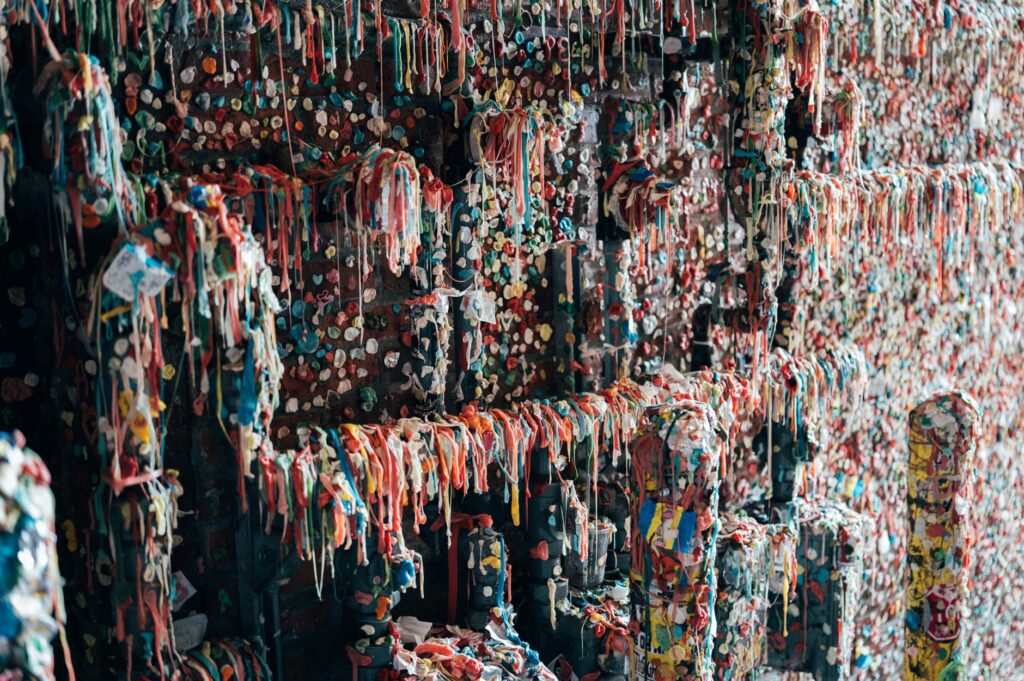
The alley behind Pike Place Market is covered in chewed gum stuck to the brick. Thousands of pieces of it. It’s disgusting. It’s also strangely fascinating, and saying you saw it has become a conversation starter.
The wall gets cleaned periodically. New gum goes up immediately. This has been happening for more than two decades. Park officials have accepted it as part of the market’s culture. Some people find it gross. Some people think it’s the most Seattle thing ever.
Go in the afternoon when the market is busy. The alley smells weird. The sight of that much gum is genuinely disorienting at first. Take a photo if you want. Spend two minutes here, not two hours.
This isn’t a destination unto itself. It’s a five-minute side trip while you’re at Pike Place anyway. Most travel guides skip it because it doesn’t fit the polished narrative. That’s exactly why it matters. Real cities have weird, messy corners.
The Museum of History and Industry
MOHAI sits on Lake Union with a good view of the water and the downtown skyline. Most visitors blow past it because they’ve already hit the Science Center and the Art Museum. That’s a mistake.
The museum covers Seattle’s actual story. Logging, fishing, aviation, and the tech boom all get space here. The exhibits rotate, so what’s on display changes. You see how the city grew from a timber town into something else. The permanent collection includes original artifacts instead of replica. The scale feels right too. It’s large enough to spend two hours but not so massive that you feel obligated to stay all day.
Admission runs about $20 for adults. The museum opens from 10 AM most days. Go mid-week if you want to move through without crowds. Many of the displays are hands-on, so families get something out of it. Adults also get what they came for.
The museum did recent renovation work. The layout is cleaner now. The flow from one section to the next makes sense. Honest exhibits about the Native American history of the region take up real space instead of getting a footnote. That matters.
Read more: Unique Places to Stay in Seattle Cool Hotels
The Ballard Locks and the Fish Ladder
Salmon swim upstream through locks on their way back to spawn. You watch them do it from a viewing window. The whole thing is free and strange and peaceful.
The Ballard Locks sit between Puget Sound and Lake Union. They regulate water flow and allow fishing boats to move between salt water and fresh water. The locks operate continuously. Every few minutes, another vessel comes through. But what most people remember is watching the salmon press against the glass. They move with force and purpose. You’re watching migration happen in real time.
Go early on a weekday if you want solitude. Weekends bring families. Summer brings crowds. Spring brings the biggest salmon runs. The visitor center explains the mechanics if you want to understand how the system works. Most people just watch the fish.
Parking is free and adequate. The facility takes 30 minutes for a quick visit. Most people stay longer. The whole area sits near Ballard, which has good restaurants if you want to make a half day of it. The locks operate rain or shine, so weather matters less than you’d think.
The Freeway Park Brutalist Sculpture
Freeway Park sits downtown between the highways. It’s a concrete structure that looks like something from a dystopian film. The design is intentionally bold. Many people find it ugly. Some people find it striking.
The park was built in the 1970s and renovated in recent years. It includes fountains, walkways, and viewpoints. You can walk through it. Most tourists don’t know it exists. That changes how it feels.
The space is free. The brutalist architecture actually photographs well if you know how to frame it. The waterfall system makes noise. The aesthetic is deliberately harsh and modern, not soft and natural. That’s the point. If you like design and architecture, this is worth 15 minutes. If you think all parks should have grass and trees, skip it.
The main thing about Freeway Park is that it’s real and weird and unapologetic. Seattle has beautiful natural parks everywhere. Having one intentionally artificial park in downtown balances the picture.
Quirky Neighborhood Explorations
Capitol Hill gets tourist attention. The neighborhoods worth your time are less obvious.
Fremont calls itself the “Center of the Universe.” A large statue of Lenin sits on the street. A bronze troll lives under a bridge. The neighborhood hosts a Sunday market. Street art and independent shops fill the blocks. It’s genuinely eccentric without trying too hard. Walk around, grab lunch, browse used bookstores. Nothing here is famous, but everything is interesting.
Ballard was logging territory once. Now it’s breweries and Scandinavian heritage. The neighborhood has an identity that feels earned rather than invented. Saturday Market (different from the Pike Place Market) happens in summer. The streets near the market have great food and good bars.
Wallingford is residential but walkable. Independent cafes and record shops cluster along the main drag. It’s where regular Seattle people actually live. That’s the appeal. No theme. No staged authenticity.
Start with one neighborhood early in the day. Walk without a specific destination. Stop when something catches your eye. This approach works better than checking boxes on a list.
Here’s a simple approach to picking which one:
- Head north from downtown on Interstate 5
- Exit at the sign for Fremont or Ballard, depending on your interest
- Find street parking on a residential block
- Walk for an hour in any direction that feels good
- Eat lunch somewhere you see locals eating
- Drive back when you’re ready
Each neighborhood takes about three hours if you move slowly. Most people find one they like enough to come back to. That’s how you know a place is real.
Also read: What to Do in West Seattle a Complete Local Guide
What Most Guides Miss
Seattle isn’t one thing. It’s a logging town that became a tech city while trying to stay weird. The contradiction is the point. You don’t get that from Pike Place Market or the Space Needle. You get it by wandering.
Rain is real. Pack a rain shell. Temperatures run 45 to 65 degrees most of the year. That’s not cold, but it’s not warm. Layers work better than heavy coats.
The city spreads out. Neighborhoods are far apart. A car helps. Public transit works if you plan ahead. Walking is limited to the downtown core and immediate neighborhoods.
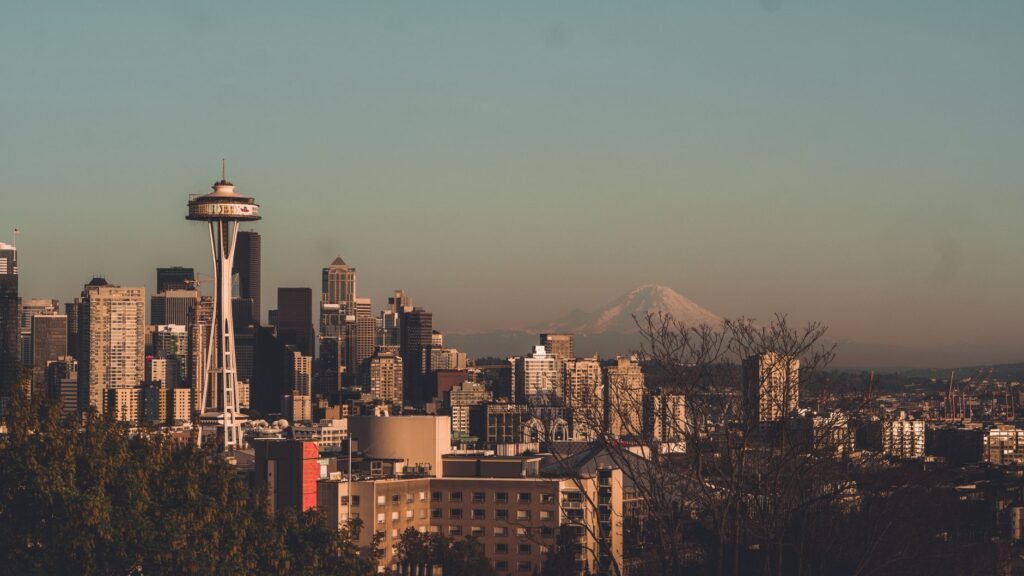
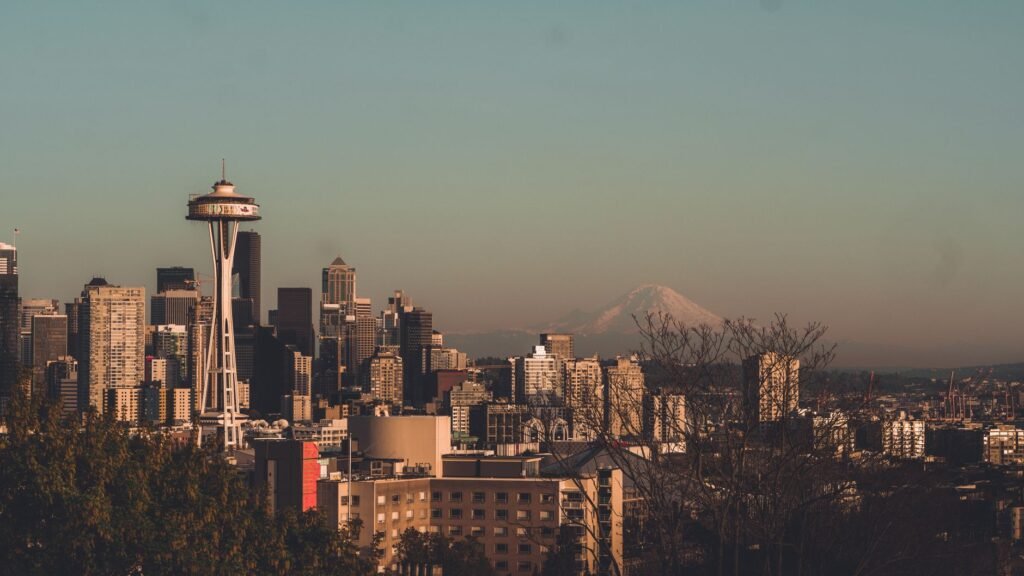
Skip the tourist traps that aren’t the Gum Wall. The Seattle Aquarium is overpriced and overcrowded. The view of the Sound from the Space Needle isn’t worth the admission cost. You can see the same view for free from Kerry Park or Discovery Park.
Discovery Park is where locals actually go. It covers 534 acres on a peninsula west of downtown. Trails drop down to the water. The lighthouse offers views north and south along the Sound. It’s real Seattle. Most visitors never find it.
The Underground Tour, Ravenna Park, MOHAI, and the Locks give you the unusual perspective. Add the neighborhoods. Skip everything else. That’s how you actually understand the place.
Reference: Seattle