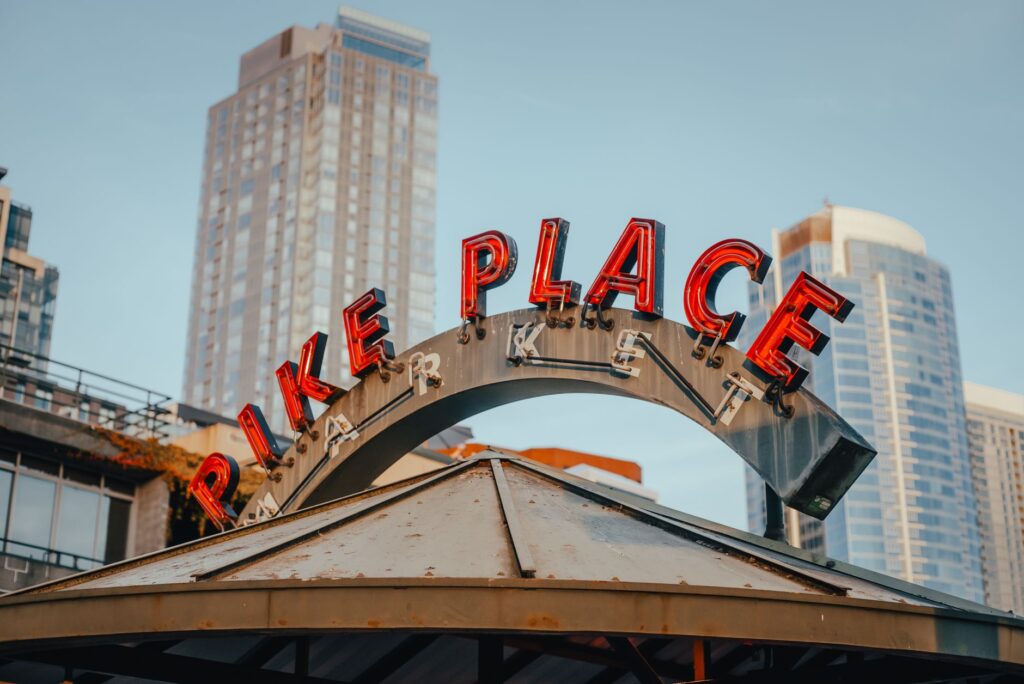
The best things to do near Pike Place Market in Seattle cluster within walking distance of downtown, offering everything from waterfront views to hidden craft shops and serious food stops. Pike Place itself demands a couple of hours minimum, but the neighborhoods that surround it are where you actually spend a full day or two. Most visitors miss half of what’s within a ten-minute walk.
I’ve been to Pike Place at least a dozen times over the years. The first visit, I made the classic mistake of thinking the market itself was the whole story. I grabbed a coffee, watched someone throw a fish, took photos, and left after ninety minutes feeling like I’d checked a box. That’s not how Seattle works. The real payoff is in what’s around the market, not just inside it.
Getting to Pike Place Market and Finding Your Footing
Pike Place Market is located at Pike Place and First Avenue. Your best bet is arriving before 10am on a weekday if you want any sense of how locals actually move through the space. Weekends are dense with tour groups by mid-morning. Parking nearby costs $10 to $15 for a two-hour stint, and the garage below the market is your most reliable option.
If you’re staying downtown, the market is walkable from most hotels. It sits at the edge of the downtown core. The neighborhood is safe during daylight and early evening hours. Like any urban center, watch your bags and don’t leave valuables visible in your car. You leave a bag on a seat unattended. It’s gone when you come back.
The Market Itself: Skip the Chaos, Hunt the Food
Pike Place Market is three things at once: a tourist trap, a working farmers market, and a genuine food destination. You need a strategy or you’ll waste time in the crush.
The fish-throwing vendors near the main entrance are real. They do throw fish. It’s loud and staged, but if you have five minutes, watch it happen once. Then move on. That section is entirely tourist traffic. The actual market begins in the side corridors and the lower levels.
Here’s where to actually spend your time:
- North end of the main floor for fresh vegetables and cut flowers
- Lower levels for specialty foods, prepared items, and vintage finds
- West side balcony overlooking the water for views and seating
The flower stalls are worth a stop just for the color and smell. Fresh pike place flowers cost about half what you’d pay in a grocery store. If you’re staying nearby, grab a bunch.
For food, forget the famous donut shop unless you enjoy waiting thirty minutes for a warm pastry. Instead, hit Piroshky Piroshky on the main arcade for meat-filled pastries that are actually worth the line. Grab one and eat it while walking. The pastry is warm and the filling is real meat or vegetable. Cost is around $6 to $8.
Waterfront and Harbor Steps
The waterfront directly west of Pike Place is where you go to actually sit down and breathe. Harbor Steps is a series of outdoor stairs and seating areas that drop from Pike Place down to the waterfront. You descend about 50 steps past small parks and viewing platforms. The views of Puget Sound and the Olympic Mountains on clear days are the kind of thing that justifies a trip here.
Walk all the way down to the waterfront itself. The smell of fish and coffee near the market at 7am gives way to salt air and seagull calls once you hit water level. The Waterfront Park has some seating and is almost always less crowded than the market above.
Aquarium is located here too, right on the water. The Seattle Aquarium is open daily and costs about $30 for an adult ticket. The jellyfish and local fish exhibits are solid. Plan about 90 minutes if you go inside. The outdoor seating area is free and has views.
Read more: places to visit near seattle in winter
Belltown and the Urban Core
Belltown is the neighborhood directly east of Pike Place. It’s mostly residential and commercial mixed together. Walk from the market toward Second Avenue and you’re in it immediately. This is where you find bars, casual restaurants, and shops that aren’t catering to tourists.
Noodle shops here are good and cheap. Most ramen or Vietnamese bowls run $12 to $15. The quality is several notches above what you’ll find in the market’s ready-to-eat section. If you’re hungry around noon, skip the market and eat here.
Belltown is also where you find the Seattle Art Museum if you want to spend 90 minutes with contemporary and Northwest Coast Native art. Admission is about $20. The building itself is striking from the outside even if you don’t go in. The plaza in front of it is a good people-watching spot.
Second Avenue in Belltown has the strongest bar scene near the market. These aren’t tourist bars. They’re local watering holes. If you want a drink around 5pm before dinner, this is where you go. Prices are normal city prices, around $6 to $8 for a beer.
Post Alley and the Hidden Depths
Post Alley runs between First and Second Avenue, just behind Pike Place Market. This is a cobblestone passage that most visitors miss entirely. It’s about two blocks long and lined with small restaurants, shops, and the famous Gum Wall. Yes, people stick gum on the wall. It’s gross. People find it charming. You probably won’t. But if you’re nearby, walk through to see it.
What matters about Post Alley is the restaurants. Matt’s in the Market sits above Pike Place itself with views. Dinner costs $30 to $60 per person. The food is Pacific Northwest focused. You need a reservation. Call ahead or plan to eat early.
Kells Irish Restaurant and Pub is also here. It’s a legitimate Irish bar, not a themed version. The bartenders are Irish. The Guinness is good. If you want a casual meal and drink, this is easier than Matt’s. No reservation needed.
Post Alley is also where you find smaller goods shops. Local honey, soaps, hand-made items. These shops rent space in the building’s older floors. Prices are fair. The experience of wandering through is worth the time even if you don’t buy anything.
Capitol Hill and the Longer Walk
Capitol Hill is too far to walk from Pike Place comfortably. It’s roughly a mile east and uphill. But it’s worth a short bus ride or a three-dollar Uber trip if you have an afternoon free. This is Seattle’s creative neighborhood, where younger people and artists cluster.
The main strip is Broadway. It runs north and south through the neighborhood. Walk Broadway from East Pine Street north to East Roy Street. That’s about half a mile of shops, cafes, and people. There’s no single “must see” here. The neighborhood itself is the draw.
Vintage shops line the street. Record stores still exist here. Coffee shops have real character instead of branded sameness. A meal here costs $15 to $25. You can easily spend three hours wandering without purpose and feel like you’ve seen something real about Seattle. Most tourists skip it entirely. That’s your advantage.
The Capitol Hill station for light rail is on Broadway. If you’re coming from Pike Place, take the bus down to the waterfront and transfer to light rail. It’s simple. The light rail costs about $3 and takes twelve minutes from downtown.
Also read: things to do in seattle near pikes place 4
International District and Concrete Real Estate
The International District sits south of Pike Place, about half a mile. It’s accessible by light rail from downtown for the same $3. This neighborhood is mostly Asian restaurants, small shops, and absolutely no tourism infrastructure. You’re the only English speaker in most restaurants. That’s the whole appeal.
Wing Luke Museum is here, focused on Asian American history and art. Admission is about $15. It’s small but focused. Plan 90 minutes. The real draw though is eating. Pho costs $10 to $12 a bowl. Chinese food is real and cheap. Vietnamese banh mi sandwiches are $6 to $8.
Uwajimaya is a massive Asian grocery and department store. Even if you don’t cook, walking through it is interesting. The produce section alone is worth a look. Prices are lower than Pike Place market for similar items.
This neighborhood is safe and well-lit but feels distinctly different from downtown. Go here if you want to see a Seattle that isn’t packaged for visitors. You’ll eat better and spend less money.
Olympic Sculpture Park and the Waterfront North
Olympic Sculpture Park sits north of Pike Place, accessible by a short walk along the waterfront pathway. About 20 minutes on foot from the market gets you here. Alternatively, drive. Parking is free.
The park has large outdoor sculptures spread across a grassy area overlooking the water. It’s free to walk. The views of the Sound and the sculpture installations are good. On clear days, the Olympics are visible across the water.
This is your good-weather move. If it’s raining, which it often is here, skip it. The sculptures are the same whether you see them soaking wet or dry. Benches are scattered throughout. Pack a coffee from Pike Place and sit out here if you have time.
Also read: best hikes near seattle
Making a Decision and Moving On
Most people should plan a full day for Pike Place and the immediate area. Give the market two hours. Spend an hour on the waterfront. Eat lunch in Belltown. Walk Post Alley. That gets you to early evening. If you have a second day, take a bus or light rail to Capitol Hill or the International District.
Seattle’s real character is in its neighborhoods, not in its main tourist zone. The market is worth seeing once. Everything around it is worth returning for.
Reference: Wikipedia: Pike Place Market