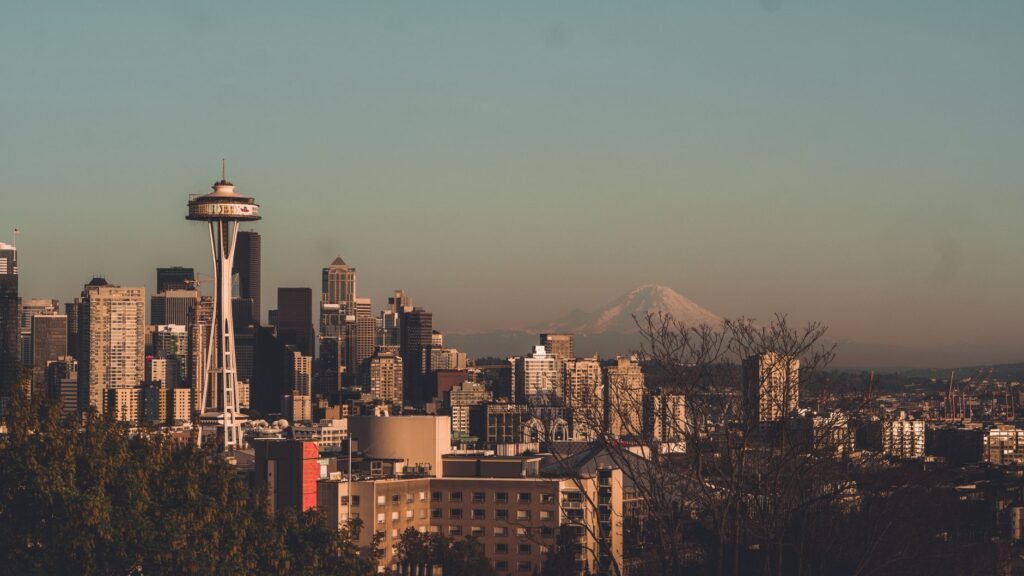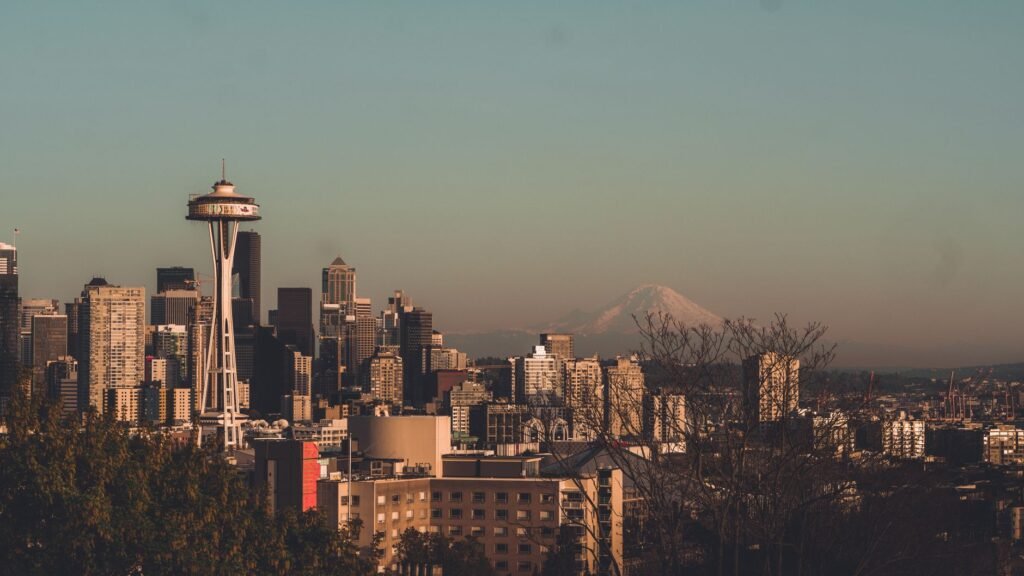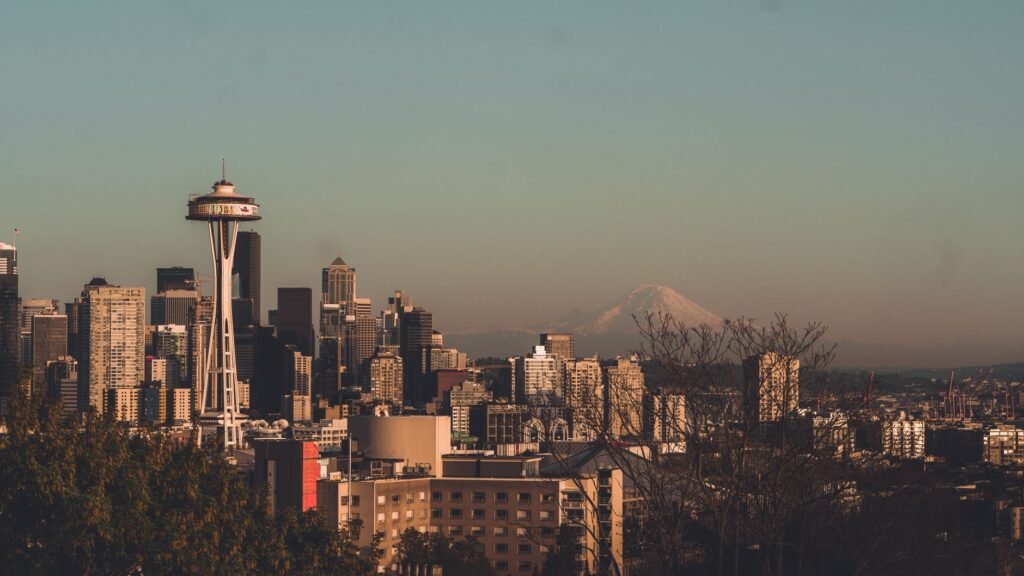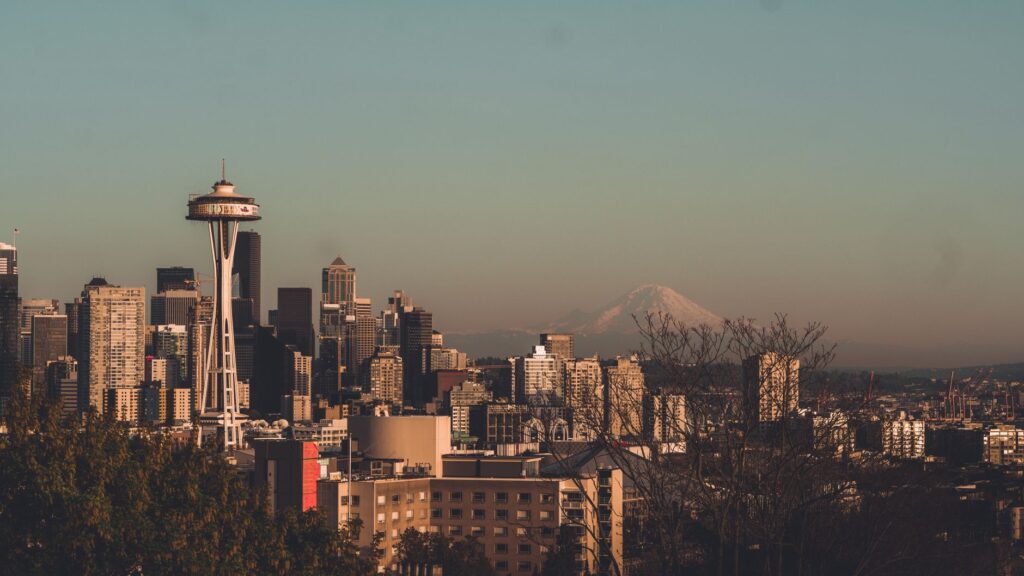
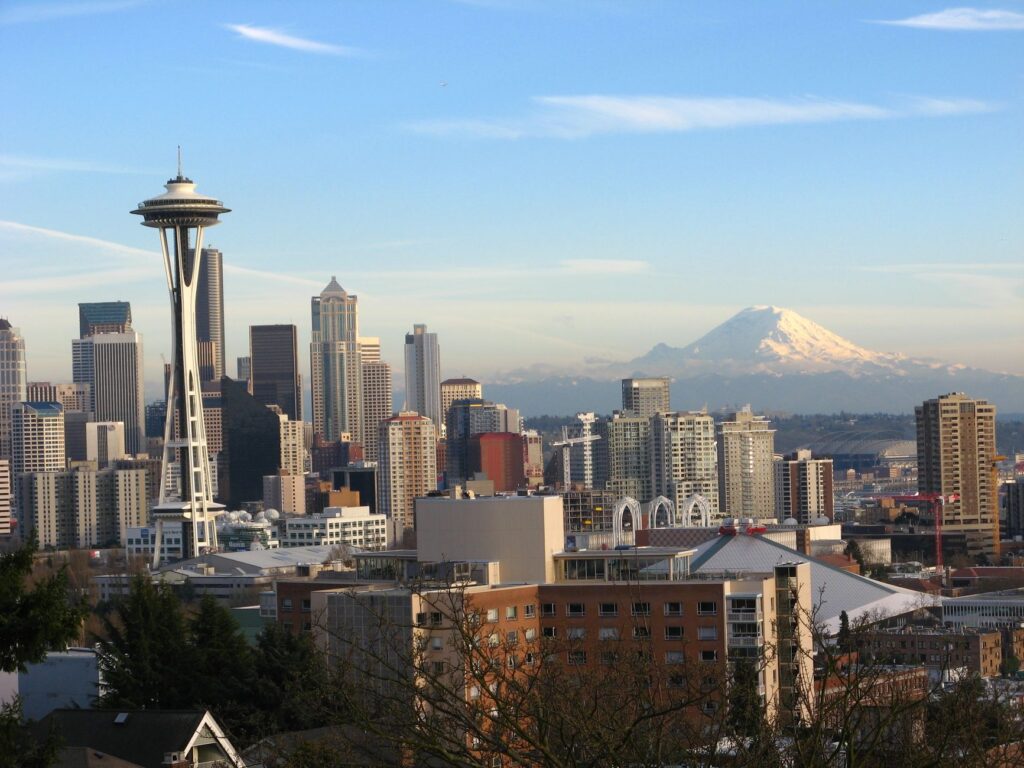
You can drive from Seattle to Mount Rainier in under two hours, or you can spend a full day there and make it a real trip. The peak sits only about 85 miles southeast of downtown, which makes it one of the easiest mountain getaways from the city. What matters is knowing which route to take, how long you want to stay, and what shape you want your visit to be in.
The Simplest Drive Route
The fastest way to get from Seattle to Mount Rainier is the Nisqually Entrance route. You take Interstate 5 south for about 20 miles toward Tacoma. Then you peel off onto Washington State Route 7 and follow it for another 50 miles or so. The drive is straightforward. There are no mountain passes or gravel sections once you commit to Route 7.
This route makes sense if you have limited time. You avoid the snowy passes that can close in winter. The road is paved the whole way. But here is the trade-off: you arrive at the least dramatic entrance to the park. The views on approach are decent, not stunning. You are coming through agricultural land and smaller towns. By the time you park and start hiking, you have eaten up the better part of three hours.
Most visitors heading to Mount Rainier use this Nisqually route. It is the most reliable option from Seattle. Parking fills up on summer weekends, especially around midday. If you are going on a Saturday or Sunday from June through August, aim to leave Seattle before 8 am. The visitor center at the entrance opens at 9 am. Get there by 10 am and the lot is half full. Arrive at noon and you might circle for 20 minutes looking for a spot.
The Stevens Pass Alternative
If you have the time and want better alpine scenery on the way up, consider U.S. Route 2 over Stevens Pass. The drive is longer. It takes about three hours instead of two. But the forest is denser. The views as you climb are genuinely good. You pass through the North Cascades instead of skirting around them.
This route makes sense for a day trip in summer when the pass is open. Stevens Pass closes in winter, sometimes for weeks at a time. Check the highway department website before you leave if it is November through April. The road can be icy even when it is officially open. Road conditions change fast once you leave the interstate.
Take I-5 north out of Seattle toward Everett. Then hop on U.S. 2 east. The pass itself is the scenic payoff. Pine forests rise on both sides. The climb is steady but not severe. On the far side, you drop down into the Wenatchee valley. Then you double back west on U.S. 97 and connect to Route 7 heading toward the park.
Sound complicated? It is not as bad as it reads. Signs are clear. The road is well-maintained. You do spend more time in a car. The reward is that you avoid the flat agricultural approach on Route 7. For people who love driving through actual mountains, this path wins.
Also read: road trip from seattle to yellowstone national park
Guided Tours and Bus Options
If you do not want to drive, Mount Rainier tour companies run daily trips from Seattle. Several operators offer full-day excursions. They handle the driving and usually include a guide. Prices run between $130 and $200 per person, depending on how much is bundled in.
The advantage is obvious: you drink coffee and look out the window instead of gripping the wheel for two hours. The downside is that you lose flexibility. Tours run on a fixed schedule. You leave at a set time and return at a set time. If you wanted to hike for five hours, you cannot. The itinerary is carved in stone.
For solo travelers or people nervous about mountain driving, tours make sense. For anyone with a car and a flexible schedule, driving yourself is simpler and cheaper. You pay gas and maybe a parking fee. That runs you $15 to $30 total. A tour costs six or seven times that.
When to Go and What the Road is Like
The road to Mount Rainier opens year-round. Winter is a different story. Snow closes the roads above Longmire, which is partway up the mountain, from November through May most years. You can still drive to the park entrance. You just cannot drive farther into it. The Nisqually road stays open. The high alpine roads stay closed.
If you go between June and September, roads are clear. You can drive all the way to Paradise, which is the most popular section of the park. In spring and fall, conditions are mixed. October can be excellent. The summer crowds thin out. The weather is often clear. But snow can come early. One October trip, I left Seattle in shirt sleeves and encountered snow flurries at higher elevation.
Spring, meaning April and May, is unpredictable. Rain is almost certain. Snow is possible. The wildflower displays are starting, so some people make the trip anyway. The payoff depends on which year you go and what week you pick. Honestly, skip spring unless you have a specific reason to be there.
Summer is safe. It is also packed. Expect full parking lots. Expect crowds on all major trails. If you go in July or August, go early. If you go in early June or after Labor Day, you get better conditions and fewer people.
What You Need to Know Before Leaving Seattle
The park charges an entrance fee of $30 per car for a seven-day pass. That is a standard national park rate. You can pay it at the gate with cash or card. Many people buy an America the Beautiful annual pass for $80, which covers all federal lands. If you visit parks more than twice a year, that pass pays for itself.
Bring layers. The temperature at lower elevations near the park entrance sits about 10 degrees cooler than Seattle. Higher up at Paradise, it is 15 to 20 degrees cooler. If Seattle is 70 degrees and clear, Mount Rainier could be 55 degrees and partly cloudy. Rain jackets are not optional. They are mandatory. The mountain makes its own weather. Sunny mornings turn gray by afternoon.
Gas up before you leave the Seattle metro area. There is a small town called Eatonville about 20 minutes from the park entrance. It has a gas station. Prices there are noticeably higher than in the city. The nearest lodge or restaurant inside the park is basic. If you want real food, eat in Seattle or grab something quick in a town on the way.
Cell service is poor to nonexistent inside the park. Download offline maps if you are using your phone for navigation. Better yet, grab a paper park map at the entrance. They are free. Even better, study the route before you leave home so you are not fumbling with directions once you are there.
Reference: National Park Service – Mount Rainier
Parking and Where to Start
The Nisqually Entrance puts you at Longmire. This is a historic lodge area. It has a visitor center and basic facilities. Parking here fills up on busy days, but there is usually something. Many people drive a few miles higher to Paradise, where the real parking crunch happens.
Paradise is the high-elevation viewpoint. It sits at about 5,400 feet. The drive from Longmire to Paradise takes 20 minutes. Parking at Paradise overflows by mid-morning on summer weekends. If the lot says full, it really means full. The Park Service does not let you circle endlessly. Rangers direct traffic. If there is no space, you are sent back down to Longmire.
One option is to arrive at Paradise by 8:30 am. Another is to go to Longmire, hike around there for an hour, and try Paradise again mid-afternoon when people are leaving. A third option is to skip Paradise and explore other parts of the park that are less crowded.
A Sample Schedule for a Full Day Trip
If you want to maximize your time, here is a realistic itinerary:
- Leave Seattle at 6:30 am
- Arrive at Nisqually Entrance by 8:45 am
- Pay the entrance fee and reach Longmire by 9:15 am
- Hike the Trail of the Shadows at Longmire for 90 minutes
- Drive to Paradise and arrive by 11:15 am
- Grab lunch and do a shorter hike near Paradise, such as the Skyline Trail
- Leave the park by 4 pm
- Arrive back in Seattle by 6:30 pm
This gives you a real day in the mountains without feeling rushed. You get two different areas of the park. You hike twice. You see both the forest sections and the alpine meadows. The drive is manageable. You are not staring at the clock.
If you have a full weekend, stay overnight in a nearby town like Ashford or Packwood. This removes the time pressure. You can explore multiple entrances. You can do longer hikes. You can watch the mountain at sunrise. Everything feels less frantic.
The Bottom Line
Getting from Seattle to Mount Rainier is easy. The road is good. The distance is short. You have options depending on what kind of drive you want and how much time you have. The real question is not whether you can get there. It is whether you want to spend two hours driving for a few hours of hiking, or whether you want to make it a longer trip where the mountain is the focus, not just the destination. Either way, it is close enough that you should not overthink it. Just go.