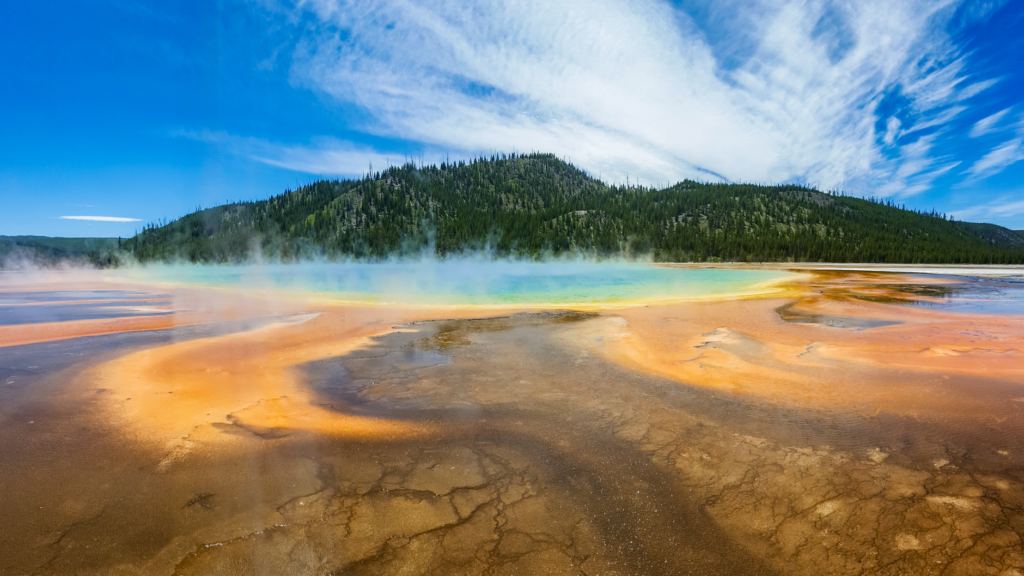
The drive from Seattle to Yellowstone National Park takes about 14 to 16 hours of pure driving time. That means a one-day sprint is theoretically possible. But you don’t want to do it that way. The real road trip from Seattle to Yellowstone national park when you break it into two or three days. You’ll see the Cascade Range, cross into dry Eastern Washington, cut through Idaho, and hit some solid stops along the way. The scenery changes fast, the towns are worth your time, and you arrive at Yellowstone actually rested.
Most people drive this route straight south and east. That’s the logical path. You head out of Seattle on I-90, pass through Snoqualmie Pass, and then the landscape turns from wet forest to sagebrush in about three hours. By the time you cross into Idaho near Coeur d’Alene, you’re already in a different world. The air is clearer. The sky is bigger. Then you have choices about how far to push on day one, where to stop for the night, and which route finishes the job to Yellowstone’s north or west entrance.
The Route and Driving Reality
The fastest path runs I-90 east from Seattle straight through to Missoula, Montana. From there you head south to West Yellowstone or continue to the north entrance at Gardiner. That’s roughly 450 to 500 miles depending on which entrance you pick. You can also dip south through Idaho toward Sun Valley or Stanley. Those routes add time but they’re genuinely lovely. The third option is the northern swing through Spokane and then south through the Montana valleys. No single route is wrong. It depends on what you want to see and how much time you have.
Do not underestimate the mountain passes. Snoqualmie Pass stays open year-round. Road conditions change fast once you leave the interstate. In winter or spring, check the Washington State Department of Transportation website before you leave. A clear morning can turn to snow above 3,000 feet. Summer is straightforward. Fall and winter need prep.
Gas prices on this route are higher than you expect. Eastern Washington and Idaho have fewer stations than the Puget Sound area. Fuel up before you leave Snoqualmie Pass. Fuel up again in Spokane if you go that way. If you head toward Stanley or Sun Valley, that mountain stretch has almost nothing between towns. One bad decision and you’re on fumes in the dark.
Where to Stop: Night One
Spokane makes sense for many people on the first night. It’s about 280 miles from Seattle. That puts you roughly halfway. You arrive in early evening, sleep, and finish the second day without fatigue. Spokane has real hotels, good restaurants, and nothing special to see. It’s a functional stop. Think of it that way and you’ll be happy.
Coeur d’Alene, Idaho sits about 240 miles from Seattle. It’s prettier than Spokane. The town borders a large lake and has an actual downtown with character. The drive there is scenic. You get mountain views approaching it from the north. If you don’t mind arriving around dinner time and pushing a bit further the next day, Coeur d’Alene is worth the detour. Hotels run from 70 to 150 dollars depending on season and how close you want to be to the downtown waterfront.
Another option is to drive almost all the way the first day. Missoula, Montana sits roughly 380 miles away. That’s a 7 to 8 hour drive. Most people can do it. You arrive tired but you’re close enough to Yellowstone that the next morning is short. Missoula is also a college town with character. The restaurants are better than average for a town this size. The setting is genuinely good, with mountains visible from downtown.
What matters most is honest assessment of your energy. A tired driver makes bad decisions. Sound like a lot? It adds up fast on a road trip. Pick a stop where you’ll sleep well and not resent the time spent there.
Day One Stops Worth Your Time
Skip Snoqualmie itself. The waterfall is visible from the highway. Pulling off adds 20 minutes and the parking lot is a nightmare on weekends. If you must stop there, arrive before 9am or after 5pm.
Ellensburg, Washington is a good early break. It’s about 100 miles from Seattle. There’s a coffee place called Brickhouse and a sandwich shop called The Breakfast Table that’s actually solid. The drive through the Cascade foothills around there is good. Get out of the car, walk around, grab food, and move on.
The small town of Snoqualmie itself has a casino and nothing much else. Skip it. But the landscape around there is the real draw. Once you clear the pass and head east, the forest thins out. You see why people left Seattle to live out here. The air feels different. The sound is different. People who move to Eastern Washington specifically choose that stark, dry, open feeling.
Spokane deserves two hours if you stop there on day one. Walk down to the Gonzaga campus area. Check out the riverfront. Eat something better than a chain. The Cheney Spokane area has a surprising food scene if you know where to look. Local spots beat the downtown chains.
If you’re heading toward Coeur d’Alene, the drive gets prettier as you approach the Idaho border. The landscape is still sagebrush but the mountains get closer. The lake appears suddenly as you descend into town. Find a room near the waterfront if possible. Walk the boardwalk. Eat fresh fish at one of the restaurants overlooking the water.
The Second Day: Into Yellowstone Territory
From Spokane, your choices split. South toward Missoula is scenic and straightforward. East toward the Panhandle and then down to Coeur d’Alene adds curves and hills but you’re in bigger mountains. North toward the Canadian border sounds wrong but Highway 395 south from Omak is actually striking. The Okanogan Valley is dry, high-desert, and less touristy than the main corridors. You can cut east from there toward the Mission Mountains and hit the Flathead Valley. It’s longer. It’s worth it if you have the time.
Missoula sits at a crossroads. You can push south toward West Yellowstone from here. The drive is about 110 miles and takes two to three hours depending on which pass you cross. Or you can head east toward Red Lodge and approach from the north. Red Lodge is a small mountain town with character. The drive from Missoula to Red Lodge goes through some of the best scenery in western Montana. The town itself has good restaurants and a genuine ski town vibe. From Red Lodge it’s another 60 miles down to Gardiner, the north entrance to the park.
West Yellowstone is a proper tourist town. It exists because of the park. Everything there caters to visitors. The motels are cheap. The restaurants are fine. The atmosphere is a bit worn but honest about it. If you want to be at a park entrance before 10am the next morning, West Yellowstone makes sense.
What to Know Before You Go
Book hotels in advance if you’re going between June and September. This route is not obscure. Both Spokane and Coeur d’Alene fill up. Missoula books solid on weekends. If you show up without reservations in summer, you might find a room. You might not. The risk is real. Booking takes 10 minutes. Do it before you leave home.
Gas prices jump once you cross into Idaho and Montana. Budget accordingly. A full tank in Spokane might be 60 to 70 dollars. Fuel economy drops in the mountains. You’re climbing elevation. The engine works harder. Plan for that.
Bring water and snacks. Real snacks. Not gas station chips. The drive has stretches with nothing but sagebrush for 30 miles. You don’t want to arrive thirsty. Bring a cooler with water and some fruit. It costs nothing and saves you money and regret.
The northern route through Gardiner is more dramatic than the West Yellowstone approach. You cross high country. The descent into the Yellowstone caldera is stunning. The park entrance at Gardiner is less crowded than the west entrance. If you’re going to spend time in the park, Gardiner is a better base. West Yellowstone is convenient. Gardiner is better.
Final Thoughts
This road trip works because the drive itself is good. You’re not white-knuckling through traffic. You’re not checking your phone every ten minutes. The landscape keeps changing. The towns are real. You build in time to sleep and eat well. By the time you reach Yellowstone, you’re rested instead of wrecked.
The key is picking your stop wisely and not trying to do it in one day. Two days is ideal. Three is luxurious. One day is possible and leaves you exhausted. Measure your own energy honestly and book accordingly.