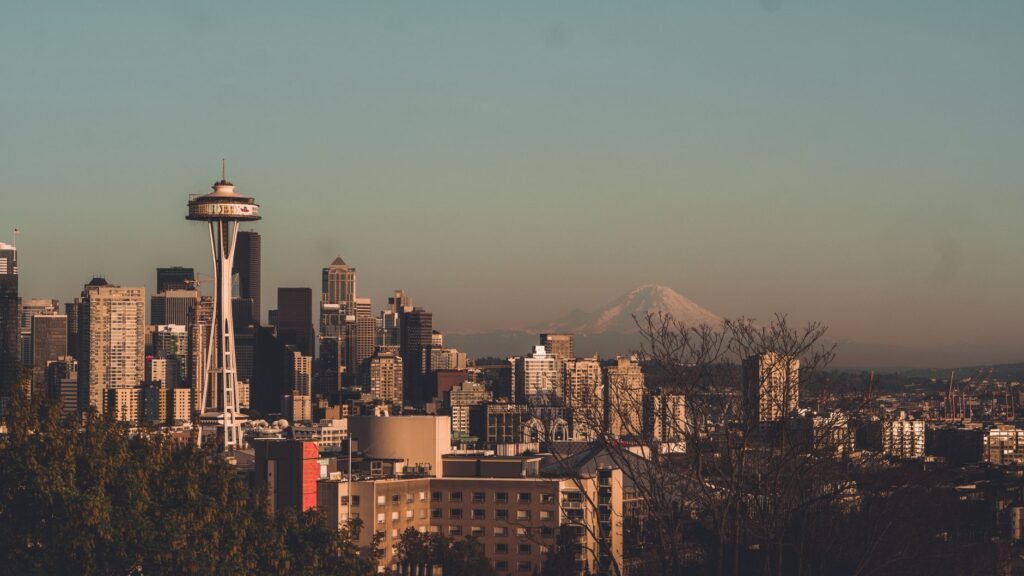
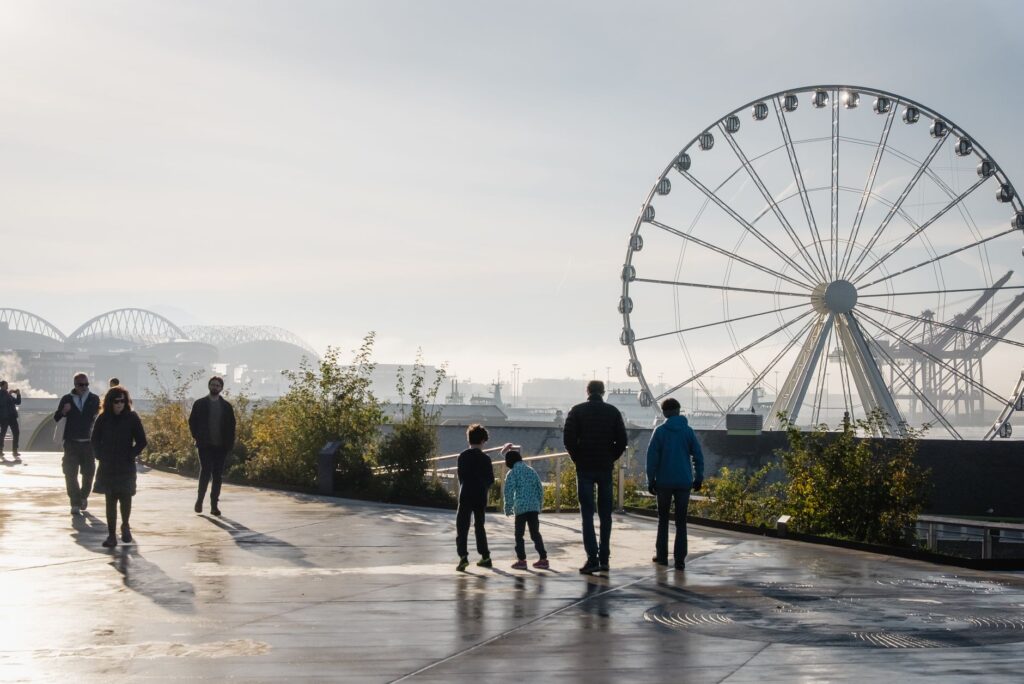
The best family things to do in Seattle range from world-class museums and waterfront parks to quirky neighborhoods and easy day trips. You can spend a solid week here with kids and never run out of worthwhile activities. The city is laid out in a way that makes sense. Most neighborhoods are accessible by bus or a short drive. Weather is mild most of the year, though rain happens often.
Seattle isn’t a place where you need to choose between activities or entertainment. The city offers enough variety that you can find something for every mood and age. Your teenagers might want to explore Pike Place Market on their own. Your seven-year-old will lose her mind at the Aquarium. Everyone eats well here. That’s the Seattle formula.
Pike Place Market
Pike Place Market deserves a full morning, maybe longer if your crew moves slow. This is the oldest continuously operated farmers market in the country. It’s also the most trafficked tourist spot in the city. Go early, around 7am or 8am. The smell of fish and coffee hits you right then. The crowds are manageable. By 10am you’re pushing through shoulder-to-shoulder tourists.
The fish-throwing vendors are a draw, but they’re honestly secondary. Your kids will watch the fishmongers toss salmon around for two minutes, then move on. The real action is the food. Get fresh pastries at Piroshky Piroshky. Buy fruit from the farmers. Grab coffee from one of seven different roasters working in the same block.
Below the main level is where families find the quieter shops. There’s a gum wall down there (yes, it’s as gross as it sounds). Comic book stores, vintage shops, and oddball finds pack the lower floors. You can spend two hours just wandering without a plan. The kids see something weird every thirty seconds. That keeps them engaged.
Budget about three hours total and maybe $40 to $60 for food and small purchases. Parking is tight. Use the parking garage two blocks away rather than hunting for street spots. It costs $12 to $15 but saves the aggravation.
The Seattle Aquarium
The Seattle Aquarium sits right on the waterfront next to Pike Place Market. This is one of the few must-do attractions here. The octopus tank alone justifies the trip. Your kids will stand there for ten minutes watching it hunt and hide. The sea otter exhibits are energetic. The jellies section is hypnotic.
Give yourself two to three hours inside. The layout is circular, so you won’t get lost or backtrack. Interactive touch pools let kids handle starfish and sea urchins. The crowds move through in a predictable way. Weekdays are less packed than weekends. If you’re visiting mid-week, go later in the afternoon. Most school groups clear out by 2pm.
Admission runs about $30 per adult and $20 per child, depending on age. A family membership pays for itself fast if you plan a second visit. The gift shop is predictable and overpriced, like every aquarium. Don’t commit to buying anything there. Parking nearby costs about $15 for three hours.
What makes this aquarium different is the window to the Sound itself. You can see the actual water and real wildlife outside the tanks. Ferries pass by. Boats move through the harbor. Your kids understand instantly that this water is real and living. That context matters more than you might think.
Also read: unique places to stay in seattle cool hotels
Discovery Park and the Beaches
Discovery Park is Seattle’s largest park at 534 acres. It sits on a peninsula jutting into Puget Sound. The main draw is the lighthouse at the end of a scenic bluff trail. The walk is easy, maybe two miles round trip. Kids can handle it without complaint.
The actual lighthouse isn’t huge. It’s charming in the way old lighthouses are. What matters is the view from up there. You see the Olympics, the Sound, and on clear days, Mount Rainier. Your kids will want to spot ferries and sailboats. That occupies them for twenty minutes without you saying a word.
The park has a small beach at the bottom if you’re willing to hike down. It’s rocky, not sandy. The water is cold. Most families don’t bother with swimming. Some just skip rocks and poke around tide pools. Lower your expectations about the beach itself. The trail and the view are what you’re really after.
This is free and open all day. There’s ample parking at the main lot. Bring water and snacks. The park has no concessions. Plan for two to three hours total. It’s a solid half-day activity that doesn’t break your budget.
The Woodland Park Zoo
The Woodland Park Zoo sits in north Seattle and ranks among the better zoos in the country. It’s not San Diego, but it’s strong. The enclosures emphasize habitat over cages. The animals have room to move. You’ll actually see them rather than them hiding in the back corner.
The African savanna section is the heavyweight. Giraffes, zebras, and warthogs roam open areas. The primate sections are well done. The Red Panda Forest is excellent for smaller kids. It’s easy to find without the crowds of bigger exhibits.
Plan a full day here if you have young children who get tired easily. Plan four to five hours if your kids are older and can move fast. The zoo sprawls across 92 acres. You will walk. Wear good shoes.
Admission is about $25 to $30 per person. Parking is free. The food options are limited and overpriced, like most zoos. Bring packed snacks and a water bottle. There’s a playground near the entrance if your kids need to burn energy before leaving. Most families eat dinner after the zoo rather than trying to eat there.
The Woodland Park Zoo requires nothing fancy to enjoy. You don’t need a membership. You don’t need a special ticket time. Just show up, pick a direction, and start walking. Your kids will see animals. That’s the deal.
Neighborhoods Worth Exploring
Seattle breaks into clear neighborhoods, each with its own character. Ballard is a former fishing neighborhood turned trendy. It has breweries, shops, and restaurants. Kids can handle a walk through here in the morning. The Ballard Locks are nearby. You can watch salmon jumping upstream. It’s weird and educational.
Fremont is quirky and artsy. The Sunday Market there is worth catching if you’re in town then. There’s a troll under a bridge. There’s a Lenin statue for some reason. Your kids will find it odd. That’s the whole point.
Capitol Hill is the young, energetic neighborhood. It’s more adult-focused than family-oriented. You can grab lunch and walk around, but it’s not a place to spend four hours with kids.
Green Lake is where families go to move. A 2.8-mile path circles the lake. Joggers, walkers, and cyclists share it. You can rent bikes. You can swim in the lake during summer. You can just walk and stop at the park for snacks. This is where locals come to burn energy on weekends.
Also read: what to do in west seattle a complete local guide
The Museum of Flight
The Museum of Flight sits south of downtown near the airport. If your kids care about planes even a little bit, this museum works. It’s a working facility with real aircraft inside and outside. Kids can sit in a cockpit simulator. They can walk through an actual 747. The scale of the planes impresses them in a way pictures never could.
Budget three to four hours. The museum is large. There’s enough to do that you won’t feel rushed. The admission is about $25 per adult and $15 per child. Parking is free. The cafe food is basic but acceptable.
This isn’t a must-do for every family. If your kids have zero interest in aviation, skip it. If they’ve mentioned planes even once, consider a visit. It’s worth the drive if you’re already going that direction.
Getting Around and Practical Notes
Seattle’s buses work well and are easy to navigate. The downtown core has a free ride zone. That makes getting around Pike Place, the waterfront, and downtown museums simple. Buses run frequently. They’re clean. Buy a day pass for about $6 if you plan multiple trips.
Driving is straightforward if you’re used to cities. Parking downtown is expensive, $15 to $25 per day. Parking near attractions like the Zoo or Discovery Park is free or cheap. Traffic gets heavy during rush hours. Avoid driving downtown between 7am and 9am and 4pm and 6pm.
The weather in Seattle is often overblown. Yes, it rains. It doesn’t pour constantly. Most days are overcast and cool, 50 to 65 degrees. Pack layers, not heavy winter coats. Bring a light rain jacket. Chances are you won’t need it on any given day, but you’ll want it handy.
Good hotels with pools and family rooms run $150 to $220 per night in decent neighborhoods. Budget hotels go lower. The downtown core is convenient but expensive. Queen Anne and Ballard are good bets for families. You get quieter streets and easier parking.
Food is excellent and expensive. A casual lunch runs $12 to $18 per person. Dinner at a decent restaurant is $20 to $35 per entree. There are cheap options too. Pike Place has good food for under $10. Neighborhoods have taco shops and cheap Thai places.
Building Your Seattle Trip
Start with Pike Place in the morning if you’re arriving early. Follow it with the Aquarium. Both are downtown and walkable from each other. That’s a strong first half-day that covers the main tourist boxes.
Spend your second day at Discovery Park in the morning and the Zoo in the afternoon. The Zoo is north. Discovery Park is west. It’s not efficient geographically, but the Zoo is substantial enough to deserve its own focus. If you want to optimize driving, do Discovery Park one day and Ballard the next morning before heading to the Zoo.
Neighborhoods are filler time. If you have extra hours, pick one and walk around. Don’t plan a set itinerary for those. They work better as spontaneous exploration.
A solid three-day family trip covers the main attractions without rushing. A five-day trip lets you add neighborhood exploration, a second museum, and maybe a day trip to Snoqualmie Falls or the San Juan Islands. Most families find four days is the sweet spot. That’s enough time to do everything without feeling crammed.
Seattle rewards families willing to walk around and explore. The city is safe. The neighborhoods are walkable. The attractions are real. You don’t need specialist knowledge to enjoy it. Show up, pick an activity, and move on. Your family will find plenty to do.
Reference: Seattle