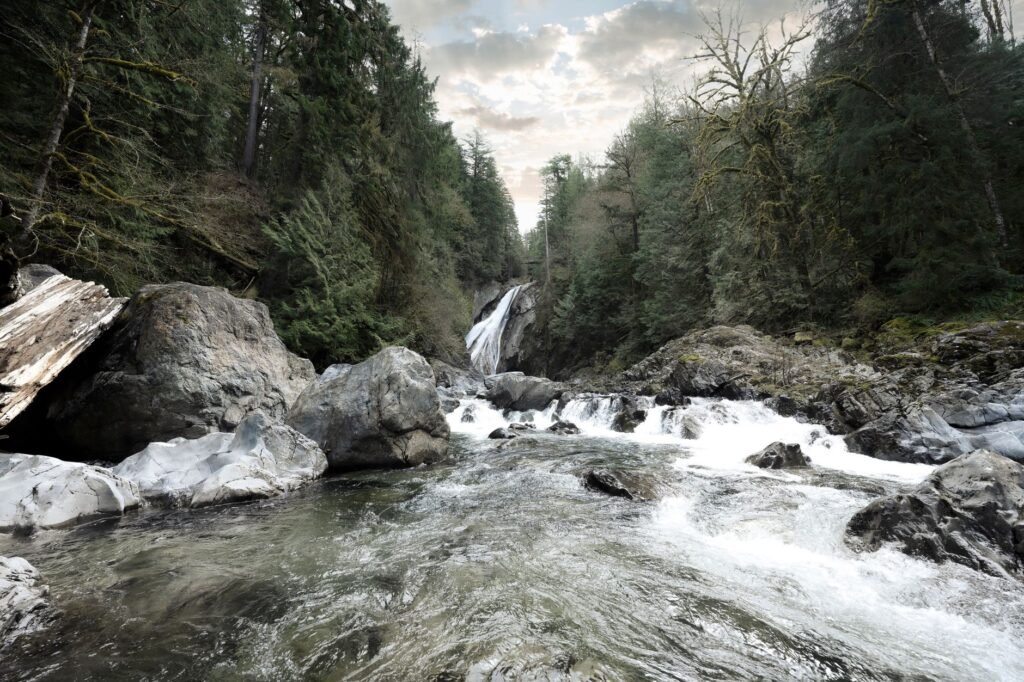
The best waterfalls near Seattle are worth a half-day drive, and you should absolutely go see them. Most people think Seattle’s appeal stops at Pike Place Market and Elliott Bay. They’re wrong. Some of the Pacific Northwest’s finest cascades sit within an hour or two of the city center. You don’t need a wilderness guide or technical gear. A decent car and a pair of walking shoes will get you there.
The region around Seattle sits in a geographic . The Cascade Range rises to the east. Glacier melt and heavy rainfall feed dozens of streams that drop off rock faces. Winter snow melts through June and July. That means water volume peaks in late spring and early summer. By August, some falls thin out. Visit between May and October for the best conditions.
Snoqualmie Falls: The Close One
Snoqualmie Falls sits 25 miles east of downtown Seattle. The drive takes about 45 minutes. This is the waterfall you’ve probably seen before. It appears on postcards and local beer labels. The falls drop 268 feet into a misty pool. That height alone makes it dramatic.
Here’s what : it’s highly developed. There’s a lodge, a casino, paved paths, and paid parking. You can walk to an overlook without breaking a sweat. The overlook puts you face to face with the cascade. Sound like a lot? It’s actually convenient. This is the right pick if you’re short on time or hiking ability.
The parking lot fills on weekends. Go early or go midweek. The trail to the lower observation area is about a quarter mile. It’s paved and flat. The upper trail adds another half mile if you want a second angle. Both paths offer good views and no real difficulty.
The lodge serves food and coffee. Prices run high. A sandwich costs $15 to $18. The casino offers another reason to linger, though that’s not why most people come. The genuine appeal here is seeing a huge amount of water drop a long distance. Snoqualmie delivers that fast and easy.
Read more: Good place to drive to near Seattle
Rattlesnake Lake and Ledge Falls: The Short Hike
Head to North Bend, about 40 miles from Seattle. The drive takes just under an hour. Rattlesnake Lake sits at the base of a granite wall. The lake is the real scene here. Ledge Falls drops over those rocks on the far side.
The parking area is free and usually has space. A 2-mile loop trail circles the lake. The terrain is easy. The path stays low and mostly flat. Children and casual walkers handle it fine. Early summer brings wildflowers along the shore. The smell of fresh water and pine dominates.
Ledge Falls becomes visible about halfway around. It’s not a massive single drop. Instead, the water spreads out and slides down a wide rock face. The effect is almost more serene than dramatic. On hot days, the mist cools the air. The lake fills the foreground. Mountains frame everything beyond.
Bring water and snacks. There’s no food nearby. The trail has minimal shade. Sun exposure is real in July and August. Start early to avoid afternoon heat. The round trip takes two hours at a leisurely pace.
Snoqualmie River Falls Along the Way
You pass several smaller cascades on Highway 90 between Seattle and North Bend. Twin Falls sits about 7 miles past the town of Issaquah. The parking is free. A 3-mile round trip trail follows the South Fork Snoqualmie River. The path climbs steadily but nothing steep. Two cascade drops wait at the top.
The forest here is dense and wet. Moss covers the rocks. Ferns grow thick. In spring, the river roars. By late summer, the water level drops noticeably. The trail is popular but never feels crowded. Most visitors are locals doing a quick weekend hike.
Twin Falls rewards a longer stay. Bring a camera and take your time. The lighting shifts throughout the day. Morning light hits the water differently than afternoon sun. The upper falls are quieter than the lower ones. Few people push all the way up.
Wallace Falls and Lake Union Scenic Loop
Wallace Falls lies about 30 miles north. The drive to Startup, Washington takes roughly 45 minutes. From there, a 5-mile round trip trail leads to three cascade drops. The hike climbs steadily. The total elevation gain is about 1,200 feet. This is more work than the previous options.
The payoff is substantial. Wallace Falls is high and powerful. Water crashes into pools below. The trail passes through old-growth forest. In spring, the undergrowth is green and vibrant. The sound of water gets louder as you climb higher. By the time you reach the upper falls, the roar is constant.
Parking is free but limited. Go very early on weekends. The trailhead fills by 10 a.m. in summer. Bring plenty of water. There’s no food or services at the start. The hike takes about two hours round trip at a moderate pace. You’ll want fitness for this one. It’s not casual.
Wallace Falls is the choice if you want a real hike. The views justify the effort. The upper falls are worth every step.
Read more: Best fall hikes near Seattle
Drift Creek Falls and Granite Creek: The Southeast Option
Drive south toward Enumclaw. Drift Creek Falls sits about 45 minutes from downtown Seattle. The area is less developed than Snoqualmie. This is a proper forest hike. The trail is narrow and sometimes muddy.
The 6-mile round trip approach requires real hiking boots. The stream crossings are manageable in summer but dicey in spring. The falls themselves are stunning. Water plunges into a clear pool surrounded by granite. The forest here feels remote. Tourists rarely venture this far.
Rock formations around the falls make for good exploring. You can wade in the pool on warm days. Bring a change of clothes. The water is cold. The rocks are slippery. Go carefully. The last thing you need is an injury far from cell service.
This is the pick for people who want fewer crowds. It costs nothing. You’ll likely have the falls mostly to yourself. That solitude has real value.
Practical Details Worth Knowing
Road conditions matter more than you’d think. Winter and early spring bring washouts. Storms can close Forest Service roads overnight. Check conditions before driving. Call ahead to confirm access. Winter weather can strike even when Seattle itself sees sunny skies.
Parking strategies change by season. Summer weekends mean early starts. Weekday mornings are almost always calm. Arrive by 9 a.m. if you want a spot near the trailhead. Paid lots at major sites run $5 to $10. Free lots fill fast but exist at most falls.
What to bring for any of these trips:
- Water bottle or hydration pack
- Snacks or light food
- Camera or phone for photos
- Sunscreen and hat
- Sturdy hiking shoes or boots
- Light jacket or fleece
- Insect repellent for summer
Phone service is spotty near most falls. Download maps before you go. Tell someone where you’re headed. Hikes here are . Slips on wet rocks happen. Stream crossings can be dangerous in high water. Use common sense. Respect the environment.
Timing Your Trip
Late May through early July is peak season. Water volume is highest. Days are long. Wildflowers bloom in some areas. Crowds are also biggest. Weekday visits feel much less busy than weekends.
August and September see lower water but excellent weather. Sunny days are frequent. Nights are cool and comfortable. Crowds thin out. This might be the best window for most visitors. The falls are still worth seeing even with less volume.
October brings fall colors. The crowds drop again. Days get shorter. Some parking areas close earlier. Rain becomes more frequent. Weather can change fast. Come prepared.
How to Build Your Day
Pick two or three falls rather than chasing all of them. Snoqualmie works as a quick stop if you’re heading east anyway. Pair it with Rattlesnake Lake for a full morning or afternoon. Add Twin Falls if you want a longer day. Skip the cascade tour mentality. Depth beats breadth.
Consider the drive time carefully. You want to actually spend time at each place. Racing between sites defeats the purpose. Most visitors are happier seeing two or three falls well than six falls rushed.
Bring lunch if you’re hiking. Packing a sandwich beats driving back to find restaurants. Most falls sit away from food options. A picnic at a viewpoint beats a fast-food stop.
Seattle’s falls deserve your time. They’re not all far away. They’re not all difficult. What they are is worth the drive.
Reference: Waterfall