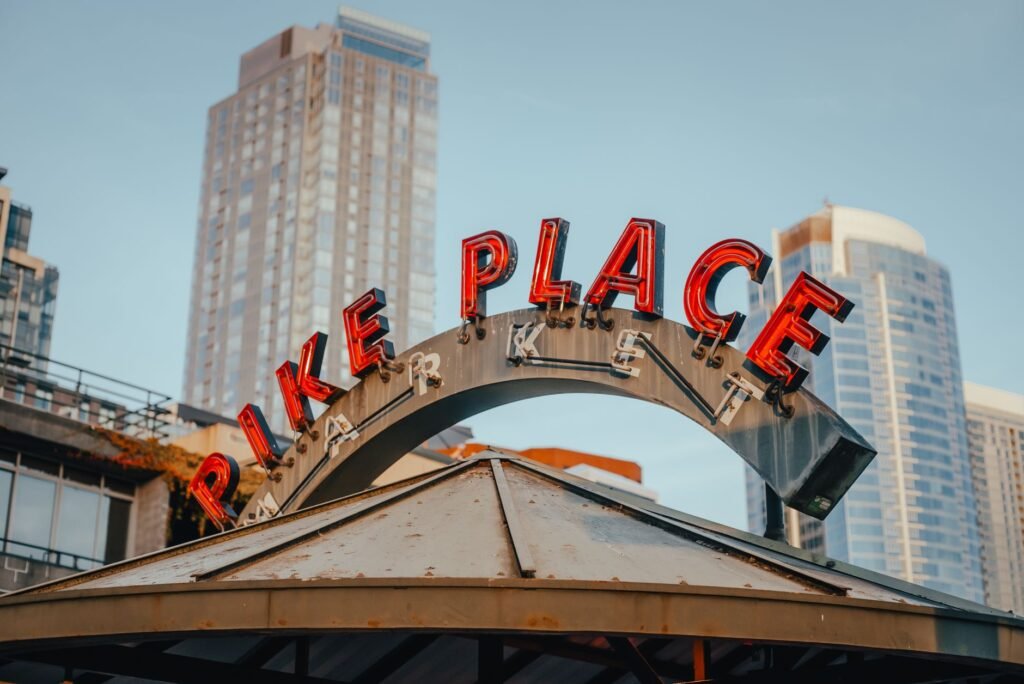
Pike Place Market is one of Seattle’s best-known landmarks, and the area around it has plenty to see on foot. You can reasonably spend three to four hours exploring the market, eating, and walking down to the waterfront. This guide covers what to do inside the market and nearby, with practical tips for avoiding the biggest crowds. Hours, businesses, and prices change, so check current information before you go.
Exploring the Market
Pike Place Market has operated since 1907 and is a mix of produce and fish stalls, flower vendors, craft booths, food counters, and small shops spread across multiple levels. It sits at the top of a steep hill above Elliott Bay. Most visitors enter near the main arcade on Pike Place, where the fish vendors are. Watching fish being thrown is a brief but popular stop. The flower stalls and produce stands along the arcade are good for browsing.
The lower levels of the market are less crowded and contain small shops selling books, records, antiques, art, and gifts. Allow an hour or two for the market itself, and visit early in the morning or on a weekday to avoid the heaviest crowds.
Gum Wall
In Post Alley beneath the market, the Market Theater Gum Wall is covered with used chewing gum. It is free, takes a couple of minutes to see, and is popular for photos. Avoid touching the wall, and expect it to be busy during the day.
Also read: Things to Do in Seattle Near Pike Place
Coffee and Food
The original Starbucks store is in the market and usually has a line. Seattle has many independent coffee shops within a few blocks, so it is easy to skip the queue and still get a good cup. For food, the market has bakeries, chowder and seafood counters, piroshky and pastry shops, cheese shops, and a wide range of small restaurants. Popular stops often have lines, so go outside the noon rush when possible. Restaurants open and close frequently, so check current reviews and hours. Many nearby restaurants along Post Alley and the surrounding streets have water or market views. For a sit-down meal, consider making a reservation in advance.
Down to the Waterfront
The Seattle waterfront is a short but steep walk downhill from the market, about a quarter mile. The Pike Place Market PC-1 Public Plaza, the Overlook Walk, and the waterfront promenade give views of Elliott Bay and, on clear days, the Olympic Mountains. The Seattle Aquarium on the waterfront is a good stop for families or for a rainy day, and the Seattle Great Wheel is nearby. Check each attraction’s hours and admission.
Washington State Ferries to Bainbridge Island depart from Colman Dock, a bit south of the aquarium. The sailing takes about 35 minutes each way and offers a skyline view, so many visitors ride round trip just for the scenery. Walk-on passengers pay a fare. Check current fares and schedules.
Also read: Places to Visit Near Seattle in Winter
Nearby Shops and Galleries
The blocks around the market have independent shops, galleries, vintage stores, and bookstores, along with souvenir shops. Wander side streets and Post Alley for smaller businesses, and look for locally made goods in the market’s craft stalls. Because stores come and go, look at what is currently open rather than relying on a fixed list.
Getting Around Beyond Walking
Downtown is hilly, so comfortable shoes help. Link light rail stops at Westlake Station, a short walk or ride from the market, and connects to Capitol Hill, the University District, and Sea-Tac Airport. King County Metro buses and the Seattle Streetcar also serve the area. From downtown, you can reach Capitol Hill, Fremont, and the University District by transit. Check King County Metro and Sound Transit for fares and routes. Downtown parking is limited and expensive, so transit is usually easier.
Seattle Center
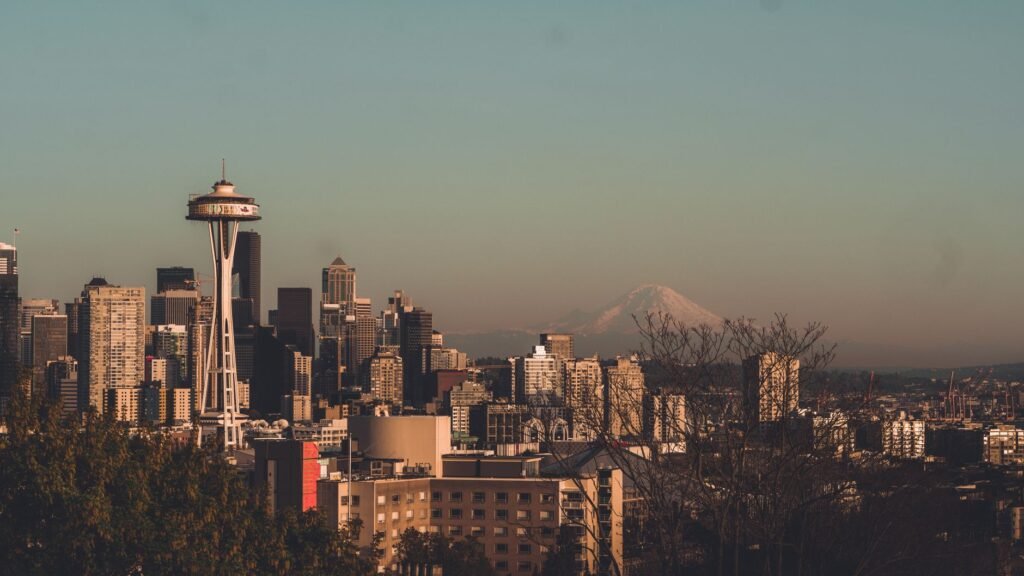
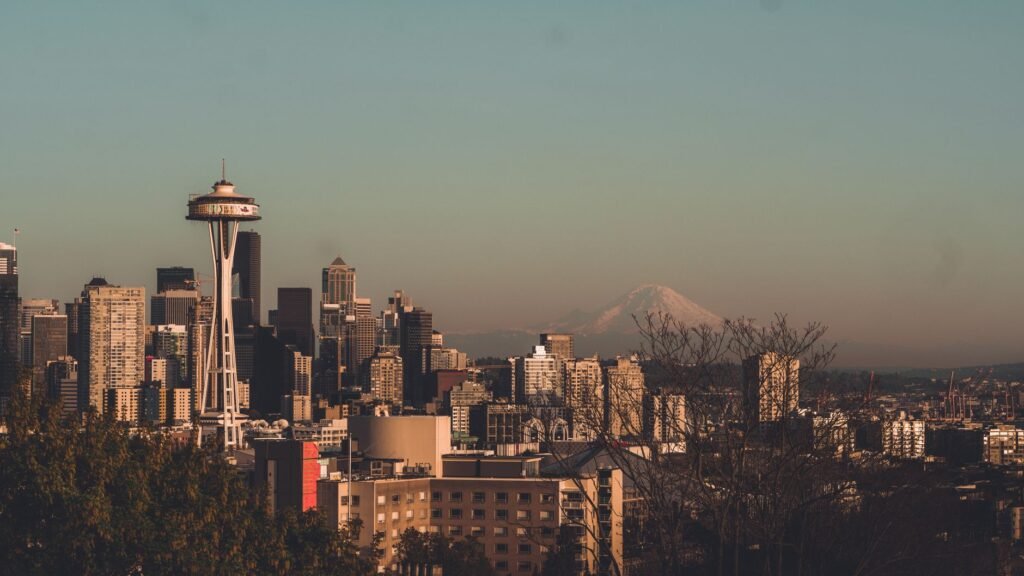
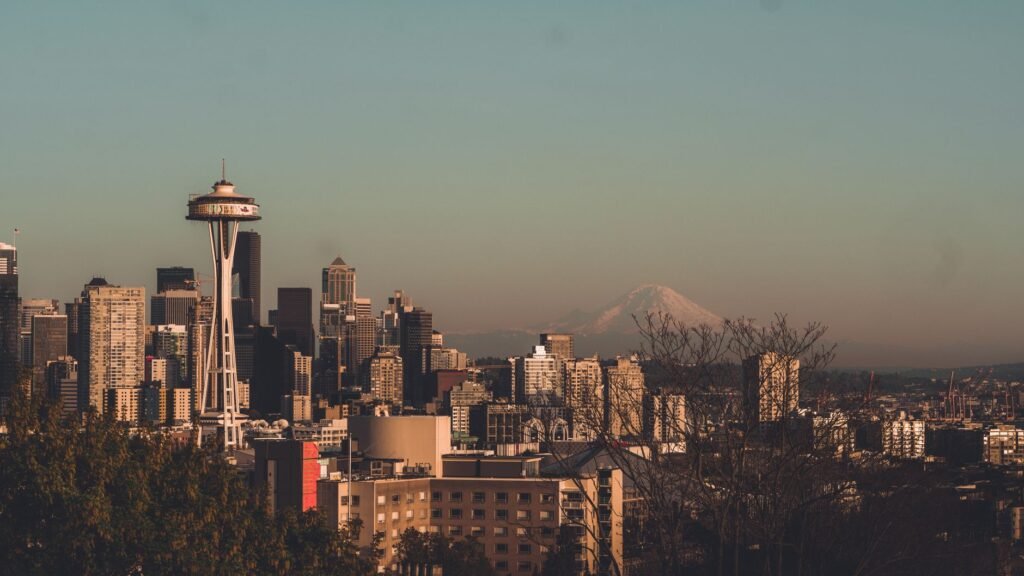
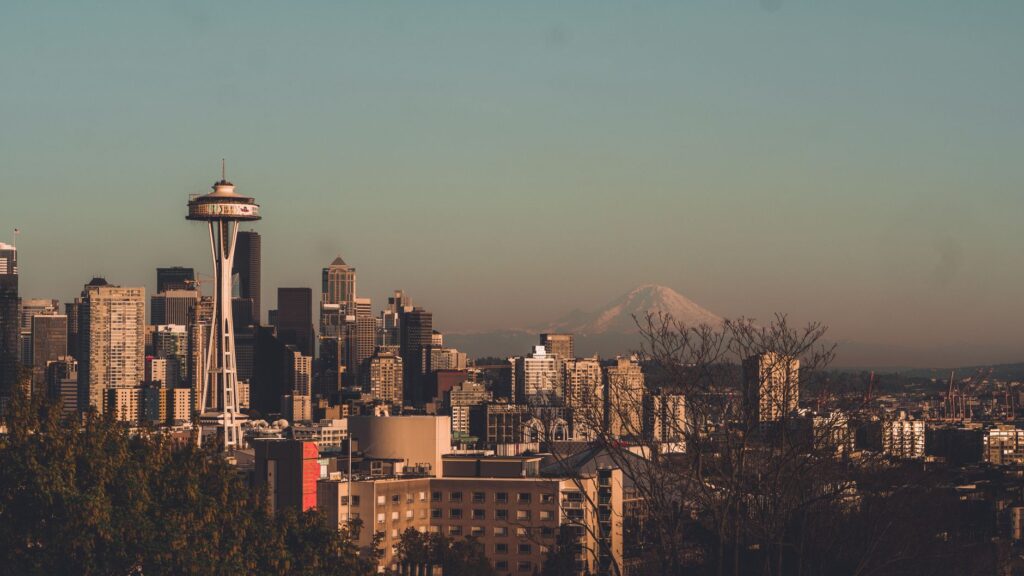
The Space Needle, Chihuly Garden and Glass, and the Museum of Pop Culture are at Seattle Center, roughly a mile north of the market. You can walk, or ride the Monorail from Westlake Center. Treat it as a separate outing rather than squeezing it into the same short visit.
Tips
- Go early in the morning for fewer crowds, and eat outside peak lunch and dinner times.
- Bring a bag, since you may buy fresh produce, flowers, or snacks.
- Watch your belongings in crowded areas.
- Check each vendor and attraction’s hours, because they vary by season.
Information changes often. Spotted an error? Tell us via the contact page.