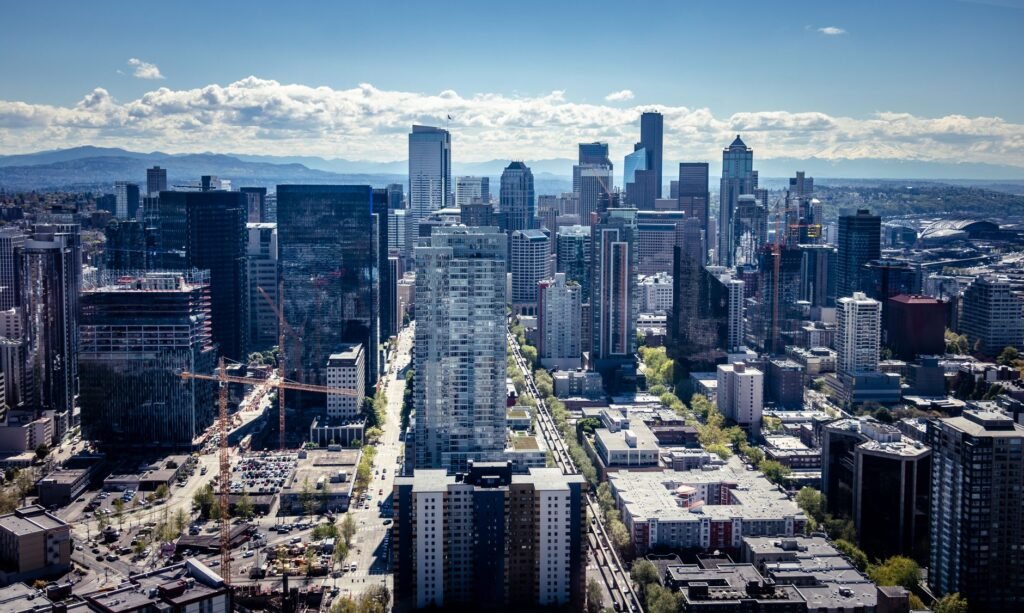
The Seattle to New York drive takes roughly 2,800 miles and 40 to 42 hours of pure driving time. Add in stops for sleep, food, and sightseeing, and you are looking at five to seven days minimum. Most people who make this trip do it in six days. That gives you time to breathe. It also keeps you from arriving delirious.
This is the kind of drive that either thrills you or exhausts you. There is no middle ground. You are crossing the entire continental United States. The landscape changes every 500 miles. The people change. The food changes. The weather changes. By the time you hit the Great Plains, you will have seen more variety than most Americans see in a year.
The route itself is straightforward. I-90 is your spine. Pick it up in Seattle and ride it east through Washington. It takes you across the Cascades, then down into Idaho. From there, the highway stretches across Montana, through Wyoming, across South Dakota, and into Wisconsin. In Wisconsin, you hang a right toward Chicago. From Chicago, you catch I-80 or I-94 toward the East Coast. Both roads work. I-94 is slightly quicker once you are east of Chicago. I-90 stays north but is scenic if you have time.
How Long Does It Really Take?
The math is simple, but the reality is messier than the numbers suggest. Forty hours of driving sounds like four ten-hour days. Nobody does that. Two days of ten-hour driving will wreck you. You start making mistakes. You miss turns. You miss exits. You start speeding without realizing it. Fatigue is a real risk on long drives, and the highway does not care about your schedule.
A sane pace looks like this: drive seven to eight hours a day. Stop in the afternoon. Rest. Eat a real meal. Walk around town. Shower. Sleep eight hours. Start again at seven the next morning. That rhythm keeps you alert. It also lets you see something besides the dashboard.
If you push hard, you can do this trip in four days. Two people driving in shifts makes this possible. One drives four hours. The other sleeps. Switch. Repeat. That works fine if your passenger is someone you trust. If your passenger is half-asleep in the passenger seat, you are doing this alone. Solo drivers should plan for six days. Five if you have iron discipline. Less than that, and you are gambling with your safety.
The Best Route for Seattle to NYC
I-90 all the way is the classic choice. Take it from Seattle due east. Stay on it through Washington into Idaho. The road climbs into the Cascades west of Spokane. The pass sits at about 4,000 feet. Snow can close it in winter. Check conditions before you leave. The route dips south toward Coeur d’Alene, Idaho. This town is worth a two-hour stop if you have time.
From there, I-90 carries you across Montana. The drive is long and empty and beautiful. The sky is enormous. The land is flat or rolling. Around Missoula, the mountains return. You are in the northern Rockies. The road is good. Traffic is light. This is where the drive feels least like work.
Wyoming brings the Bighorn Mountains. South Dakota is flat and honest. You cross into Wisconsin around Madison. Chicago comes next. This is where the drive gets crowded. I-90 and I-94 merge. Traffic thickens. Plan for slow going. Even at night, Chicago is congested.
East of Chicago, your options split. I-90 curves north toward Michigan. I-94 angles southeast toward Indianapolis. For New York, I-94 saves time. About six hours, depending on traffic. The road is faster. Fewer curves. Better sight lines. Once you hit I-65 near Indianapolis, you can either swing toward the coast or push due east toward the Mid-Atlantic.
The fastest route to New York from Indianapolis is east on I-70 toward Columbus, then northeast on I-77 toward Charlotte, then up I-81 toward the Hudson Valley. It sounds convoluted. It saves hours. The alternative is the I-95 corridor. Never take I-95 if you have a choice. It is the busiest highway in America. Traffic is chaotic. Tolls are steep. Exits come fast and without warning.
Where to Stop and Why
Breaking this journey into five manageable pieces makes sense. Each leg is eight hours or less. Each takes you to a town worth a night.
Spokane, Washington sits about 280 miles from Seattle. Drive through the Cascades in daylight. The pass is winding. The visibility matters. Spokane is dry and clean. The downtown is small and walkable. Hotels are cheap. The food is honest. You will arrive by early afternoon.
Billings, Montana is another natural stop, about 470 miles from Spokane. You cross into the northern Rockies here. The landscape is dramatic. The town has good motels. The diner food is strong. A local brewery sits downtown. Nothing fancy. Everything works. You can rest here and move on the next morning.
Madison, Wisconsin comes next, roughly 650 miles from Billings. You have crossed the central plains. Madison sits on an isthmus between two lakes. The downtown is lively. The University of Wisconsin is here. Hotels are available. The food scene is much better than you would expect at this stage of the drive. Eat well. Rest well. You are two-thirds of the way.
Indianapolis is about 200 miles from Madison. Some people skip it. Do not. It is a real city with good bones. The Speedway is here, but the city is more than that. The food is good. The people are friendly. Stop for a night. Walk around. The pace slows down for a few hours.
Virginia or North Carolina makes sense for your final overnight before New York. Raleigh, North Carolina is about 450 miles from Indianapolis. You arrive by late afternoon. Sleep eight hours. Wake up. You have about 440 miles left. You will hit the Hudson Valley by late morning. That is a human way to arrive.
Also read: Seattle to Leavenworth Drive
What to Pack and Prepare
Your car needs attention before you leave. This is not optional. Do not guess. Get a service check.
- Oil level and freshness.
- Tire pressure and tread depth.
- Coolant and windshield fluid.
- Battery health, especially in cold months.
- Brake pads.
- Wipers.
Your car is going to work. Make sure it is ready. A breakdown in Nebraska is not a small thing. You are far from home. You are far from help. The tow bill is enormous.
Bring emergency supplies. A phone charger. A car charger. A portable battery pack. Jumper cables or a jump pack. A basic toolkit. Flashlight. Blanket. Spare tire is standard, but check it. Spare jack is standard, but know how to use it.
Pack light. You are not living in your car. You are driving it. Bring one bag. Two at most. The rest of your trunk is for your sanity. You need visibility. You need room to move. Too much stuff in the back makes you feel trapped.
Food is another matter. Bringing snacks is smart. Drive-through food gets old fast. Bring almonds. Bring good dark chocolate. Bring a water bottle. Refill it at every stop. Dehydration makes the drive feel longer. It also makes you irritable.
Gas, Food, and Money
Gas prices change. They also change across state lines. Generally, fuel is cheaper in rural areas and more expensive near cities. Top off in small towns when the price is good. Do not wait until you are on empty. Plan for roughly $400 to $500 in fuel for the whole trip, depending on your car and current prices.
Food is a choice. Chain restaurants are everywhere. They are fine. Predictable. Fast. But you are driving for six days. One real meal a day keeps you sane. Stop for lunch in a local diner. Look for reviews on your phone. The food is better. The experience is better. It costs about the same.
Budget about $600 to $800 for lodging if you stop five nights. That assumes mid-range hotels. $100 to $150 per night. The chains are fine. Holiday Inn Express. Best Western. You are there to sleep, not sightsee. Pick places with a good breakfast. Skip the luxury hotels. You will not use the pool. You will not lounge. You will sleep and leave.
Also read: Drive from Seattle to Portland Oregon
Timing: When to Go
Summer is peak season. June through August. The roads are clear. The weather is good. Traffic is also heavy. Plan for delays in cities. Expect campgrounds to be full if you prefer that. Gas stations will be busy. Other drivers will be tired and irritable.
Fall is better. September and October. The weather is still good. Summer tourism drops off. Roads are clearer. The Rockies are beautiful at that time. Aspen leaves turn golden. The air is crisp. Hotels are cheaper.
Winter is possible but risky. November through March. Mountain passes can close. I-90 over the Cascades can be treacherous. The northern plains can dump snow fast. If you go in winter, check weather reports religiously. Build in extra time. Have good tires.
Spring is fine. April and May. The weather is unpredictable. Rain is common. Roads are wet. But traffic is light. Everything is cheaper. If you do not mind gray skies, spring is a smart time to go.
The Reality of Six Days in a Car
You will get tired. That is not a failure. That is normal. The first two days feel like an adventure. You see the landscape. You notice details. By day three, the landscape stops being new. By day four, you just want to arrive. That is when you push through. You know you can do it. So you do.
The people in your car matter. Traveling alone is quiet and meditative. Traveling with someone you trust is good. Traveling with someone you do not know well is difficult. If you split driving, establish clear rules before you leave. When does the driver switch? How long are breaks? Where do you stop for the night? Unclear expectations breed resentment fast.
Your phone will need charging often. Your back will want stretching. Your eyes will get tired. The solution to all of this is stopping. Stop every two hours. Get out. Walk. Drink water. Use the bathroom. These stops add time. They also keep you alive. That is the trade-off.
The Seattle to New York drive is long but doable. Plan for six days. Do not plan for four. Break the drive into pieces. Stop in real towns. Sleep in decent hotels. Eat real food. Take your time. You will arrive rested. You will have seen America. That is worth the extra two days.