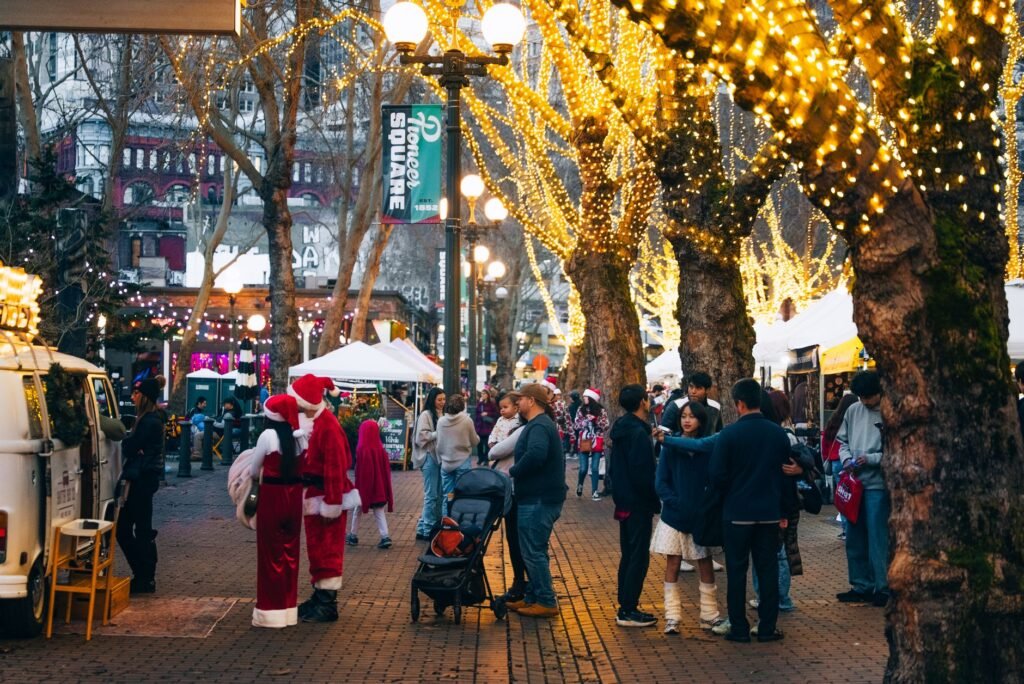
The best things to do in Seattle at Christmas run from Pike Place Market’s holiday setup to formal nutcracker performances downtown. The city transforms into something genuinely festive without the crushing crowds of coasts further south. You get rain instead of snow, yes. But the local crowds are thinner. The prices drop. And the seasonal energy, while quieter than December in New York, feels more genuine.
I spent a holiday season there recently and came away surprised by the depth of what works specifically in winter. Most visitor guides point you toward the same five spots year-round. That’s a mistake. Christmas things to do in Seattle change the whole calculus. Some venues close. Others open only for the holidays. The neighborhoods shift. And frankly, the locals actually have time to be friendly when the summer hordes aren’t flooding the sidewalks.
Pike Place Market During the Holiday Season
Pike Place Market runs year-round, but Christmas transforms it into something worth planning a full morning around. The market adds garland. The flower stalls sell evergreen arrangements instead of summer bouquets. Buskers trade in their cover songs for carols. The whole setup feels less like a tourist trap and more like actual community space.
Arrive before 10am if you want to walk without dodging crowds. This early timing gives you something most visitors miss. You see the fish vendors actually working. You smell the coffee roasters in the back corridor before the air gets thick with bodies. You can stand at the railing and watch the Puget Sound without people pushing past you every ten seconds.
The market’s famous fish stall does its thing year-round. But in December, the flower vendors become the real draw. They sell cut wreaths, garland, and potted trees that people actually want to buy. The produce section has root vegetables and holiday baking supplies. Then there’s the original Starbucks location, which operates inside the market. Skip it. The line wraps around the block and the coffee tastes the same as any other location.
Spend two to three hours here maximum. One hour of actual shopping or browsing. The rest is walking, eating, and observing. Buy something small. A pastry from one of the bakeries. Fresh cider from a juice stand. You’re not here to spend a lot of money. You’re here to see how Seattle moves when it’s focused on something besides being efficient.
The Nutcracker Ballet Downtown
Seattle Ballet performs The Nutcracker every December from mid-November through early January. Shows run six days a week. The venue is the Marion Oliver McCaw Hall in Seattle Center, a building designed specifically for performance with good sightlines from almost every seat.
Tickets start around $40 for upper balcony seats. Orchestra seating runs $80 to $120 depending on the date. Matinee shows are cheaper than evening performances. Weekday shows are cheaper than weekends. Book at least three weeks out if you want good seats at a reasonable price. Buy two weeks before and you’re probably looking at top-dollar pricing or restricted views.
This isn’t a small regional production. Seattle Ballet brings in professional dancers. The sets change completely year to year. The costumes are detailed enough that you’ll catch new things if you see it twice. Most Nutcracker productions in smaller cities feel like amateur hour. This one doesn’t.
Go to a weekday matinee if you have the flexibility. The audience is older, quieter, and less likely to have restless children. You hear the music better. You see the movement more clearly. The evening shows are fine. But matinees give you something more focused.
Read more: Unique Places to Stay in Seattle Cool Hotels
Washington Park Arboretum Winter Walk
The arboretum sits on 230 acres just east of the University of Washington campus. Admission is free. Most people visit in spring or summer when everything is in bloom. Winter is better. The crowds disappear. The light gets interesting. And the structural bones of trees become visible in a way that bloom conceals.
Mid-December through early January, the arboretum runs a holiday lights installation called Festival of Lights. The walk winds through the park along a marked path. Lights hang in trees. There are carved ice sculptures in a few spots. Local vendors set up small stands with hot cider and hot chocolate.
The walk takes about an hour. You can do it slower if you stop often. The path is paved and flat. Strollers work fine. People with mobility issues should know that the terrain is easy but the distance adds up if you walk the whole thing.
Go on a weeknight after 6pm, not a weekend evening. The parking lot fills up on weekends. The path gets crowded. You stand in line for hot cider instead of just walking up and buying it. Weeknights are genuinely pleasant. You see families and groups of friends but not massive crowds. The lights look better in full dark anyway. You’re not waiting for the sun to set.
Admission to the arboretum itself is free year-round. The Festival of Lights has a small parking fee, around $5 per car. Bring cash. The machines sometimes jam and the attendants need bills.
Capitol Hill’s Shopping and Dining Scene
Capitol Hill is the neighborhood where Seattle’s younger crowd lives and eats and drinks. It’s not primarily a tourist area. But in December, it becomes a real alternative to the downtown shopping core. The streets have holiday lights. The local shops run sales. The restaurants are less crowded than they are in summer.
Walk along Pike Street between Broadway and 15th Avenue. That’s the spine of the neighborhood’s commercial district. You’ll find independent clothing stores, record shops, used bookstores, and a few chains mixed in. The clothing stores are the real draw. Local designers and curated indie brands. Prices are higher than chains but not luxurious. Think $60 to $150 for a quality sweater or jacket.
Then there’s the food. Capitol Hill has more restaurants per square block than anywhere else in Seattle. Thai, Ethiopian, Korean, Mexican, Italian, Indian. Plus solid American food if you’re not in the mood for something specific. Most places have good happy hour deals in the late afternoon, around 4 to 6pm. Food and drink both discounted. The crowds are minimal.
The neighborhood’s bars are active but not aggressive. Nothing like nightclub tourism. Just normal people drinking after work or meeting friends for dinner. You don’t need to be part of a bro pack to enjoy a drink here. Solo travelers and couples feel welcome.
Do this on a weekday afternoon if possible. Walk around. Shop if something catches your eye. Eat dinner around 5:30 or 6pm. Avoid Friday and Saturday evenings when the neighborhood gets louder and more clubby. Weeknights are when Capitol Hill actually shows you what it is instead of what it markets itself to be.
Kerry Park Viewpoint for City Views
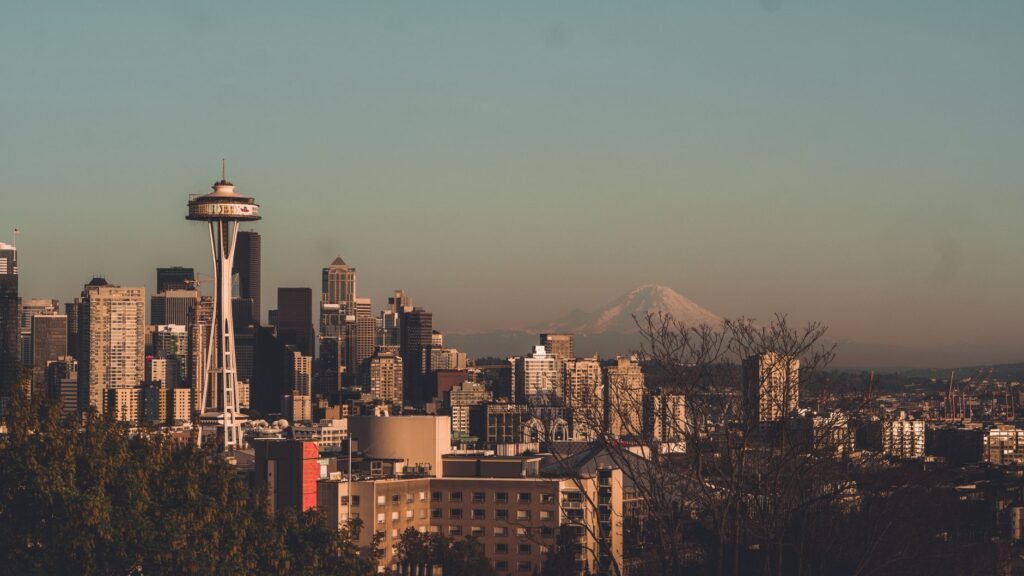
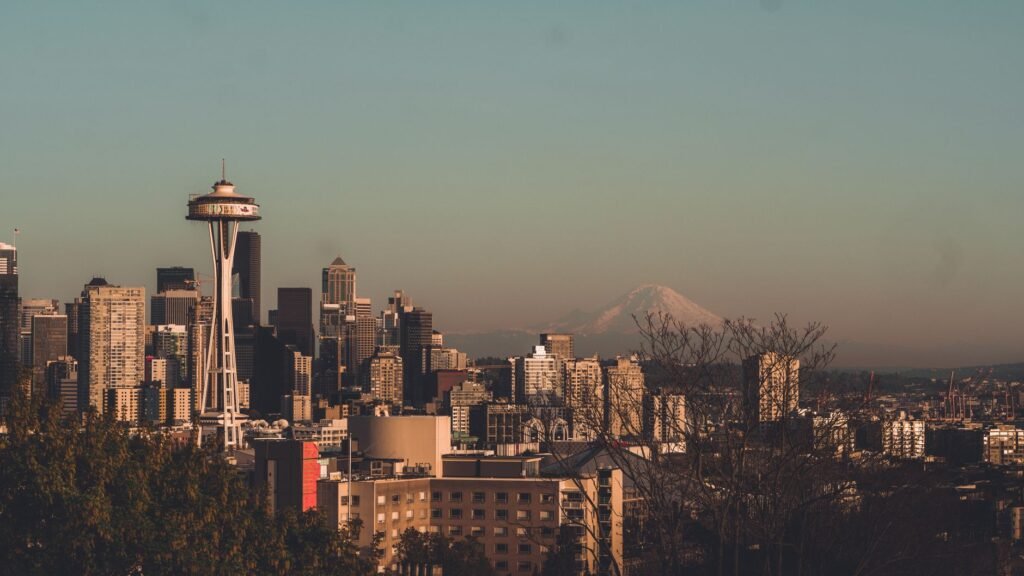
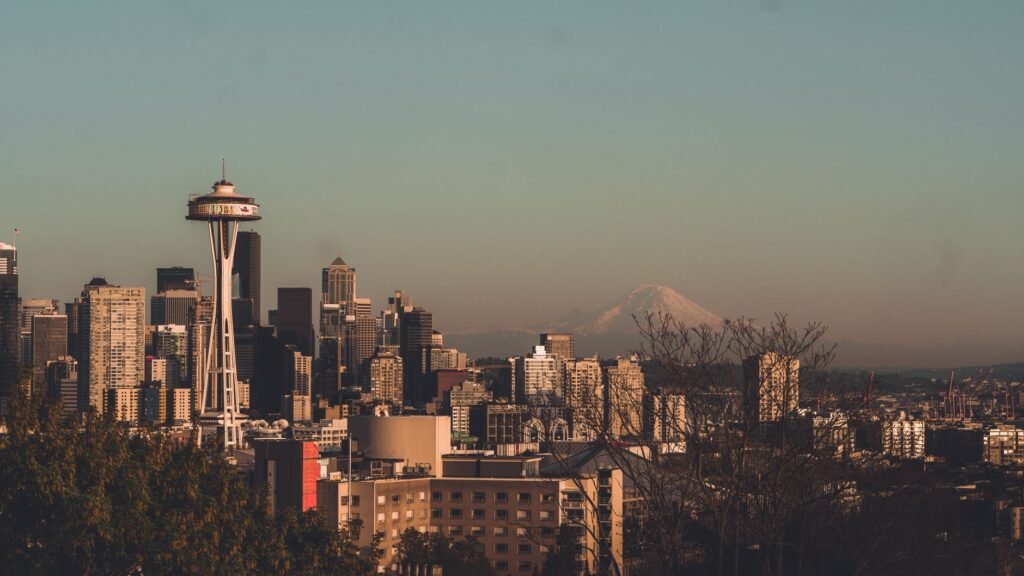
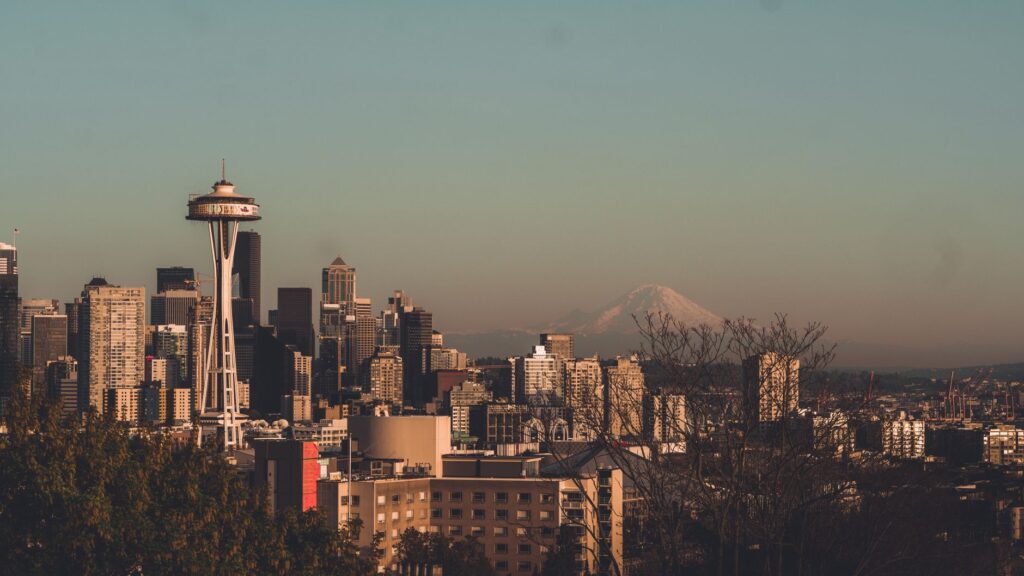
Kerry Park sits on Queen Anne Hill overlooking the downtown skyline and Puget Sound. It’s a small neighborhood park. Free admission. No facilities beyond benches and a paved viewing area. On clear days, you see the Space Needle, downtown, the Cascade Mountains in the distance, and water in the foreground.
December gives you fewer clear days than summer. But when the weather breaks, the light at sunset is extraordinary. Gray clouds part for twenty minutes. The sun hits them from the side. The whole scene glows. Then the clouds close up again. It’s odd and dramatic in a way that bright blue skies never are.
Go around 3pm in mid-to-late December. The sun sets around 4:30pm in December. You want to be there an hour before sunset. This gives you time to see the view in daylight. Then you watch the light change as the sun drops. Then you decide whether to stay for darkness or head out.
Parking is street parking only. No lot. The street is residential. Parking is free but limited. Go on a weekday and you’ll find space easily. Go on a weekend and you might circle for ten minutes. Once you’re at the park itself, stay as long as you want. There’s no fee. People bring blankets. People bring wine in thermoses and cups. It’s casual and peaceful and genuinely Seattle in its understated way.
Indoor Options for Rainy Days
Seattle gets rain almost every day in December. Not all day rain necessarily. But drizzle and showers and gray skies are the baseline. Plan indoor activities for at least half your visit.
The Museum of Flight is in south Seattle near the airport. It’s one of the better aviation museums in the country. A real collection, not a tourist trap. Most people spend three to four hours here. Kids like it. Adults who don’t care about planes often leave surprised. Admission runs $30 to $35. Parking is free.
The Chihuly Garden and Glass museum sits at the Seattle Center. It’s an indoor and outdoor museum focused on glass art by the local artist Dale Chihuly. The glasswork is genuinely striking. The architecture is interesting. Admission is $25 to $30. This one matters more if you like art. If not, it’s fine to skip.
The Waterfront Aquarium shows marine life from Puget Sound and around the world. Standard aquarium stuff. Fine if you have kids. Honestly skippable otherwise. Admission is $35 to $40.
For something different, visit the Central Library downtown. It’s a real architectural landmark designed by Rem Koolhaas. Most people don’t go for the books. They go to walk through the space. The main reading room is four stories tall. The steel and glass create an austere but striking effect. Free admission. You can spend an hour just exploring. The cafeteria is good and prices are fair.
Also read: What to Do in West Seattle a Complete Local Guide
Practical Things to Know
Seattle in December sits around 45 to 50 degrees Fahrenheit during the day. Rain is constant or near-constant. Bring a good rain jacket and waterproof shoes. Locals wear these year-round, not just in winter. You’ll blend in better if you do too.
Hotels drop rates noticeably in December compared to summer. Expect $130 to $200 per night for a solid mid-range room downtown. Budget hotels run $80 to $120. High-end hotels run $250 and up. Book at least four weeks out to lock in rates. Book two weeks out and prices jump 30 percent.
Getting around is simple. The monorail connects downtown to the Seattle Center. Cost is $2.75 one way. Buses are $2.75 local. Uber and Lyft work fine but the city is hilly and distances can be deceptive. Plan more time than you think you need to walk places.
Food is expensive compared to most American cities. Expect $13 to $18 per entree at casual restaurants. Nicer places run $25 to $50. Coffee is $4 to $6 per drink. There’s no way around it. Seattle’s wages are high. Restaurants pay accordingly.
December is a fine time to visit Seattle. You miss the summer crowds. You get rain instead of heat. The city is expensive but not as expensive as July. And the seasonal setup gives you things to do that don’t exist any other time. Plan for it specifically instead of booking a standard Seattle trip in winter and expecting the summer experience.
Reference: Seattle